 koda
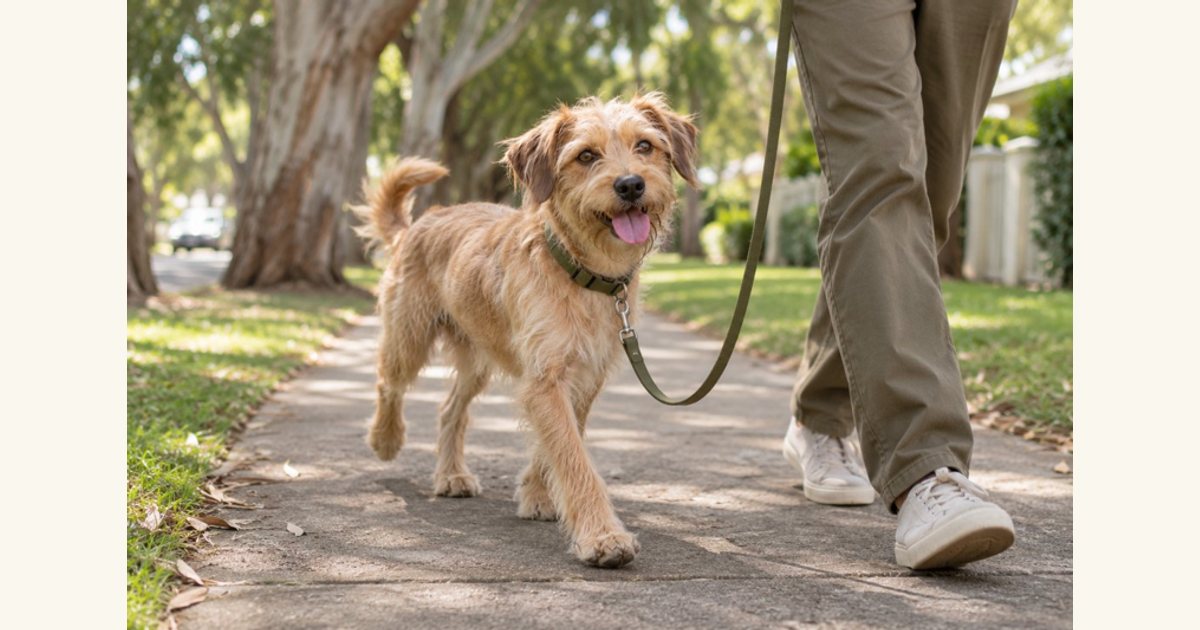
A well-fitted harness
A harness spreads any pressure across the chest instead of the throat. Look for a Y-shaped front that sits on the breastbone and leaves the shoulders free to move. Avoid harnesses with a strap straight across the front of the shoulders. You should be able to slide two fingers under each strap, and your dog should not be able to back out of it.
Front or back clip?
A harness with a ring on the chest gently turns a dog towards you when they pull, which can help while you teach loose-lead walking. A back clip is comfortable for dogs who already walk nicely. A harness with both rings, used with a double-ended lead, gives you the most options.
A flat collar for ID
A flat buckle or clip collar holds an ID tag with your phone number. Check the fit often in growing puppies. If your dog pulls hard, clip the lead to a harness rather than the collar to protect their neck.
Leads
A soft lead about two metres long gives your dog room to sniff while staying close. A long line of five to ten metres, clipped to a harness, is great for recall practice and sniffy walks in open spaces. Retractable leads teach dogs that pulling works, and they can snap or cause injuries, so avoid them near roads and other dogs.
What to avoid
Check chains, choke chains, prong or pinch collars and shock collars work by causing pain or discomfort. They can injure the neck, and they can make dogs more fearful or reactive. RSPCA Australia recommends reward-based training instead. Head halters can help some strong dogs, but they need careful, gradual introduction and are best used with advice from a reward-based trainer.
Help them like it
Introduce new gear slowly with treats. The Getting curious about a harness and Stepping into a harness lessons show you how, and A few loose-lead steps is a good place to start walking.
Practise this together
Sources and further reading
RSPCA Australia knowledgebase · What equipment should I use when teaching my dog to walk on a leash?