 koda
Why practise this?
A dog who steps into their harness makes getting ready for walks quick and calm, without lifting legs or reaching over their head.
What you need
- Your dog should already be relaxed near the harness, as in the harness introduction lesson.
- Use a step-in harness that fits well. Check the fit with the maker’s guide or a professional.
- Practise on a non-slip floor with small rewards, crouching beside your dog rather than leaning over.
The cue
Once your dog places a paw easily, say “step in” once, just before you lay the harness down.
Practise together
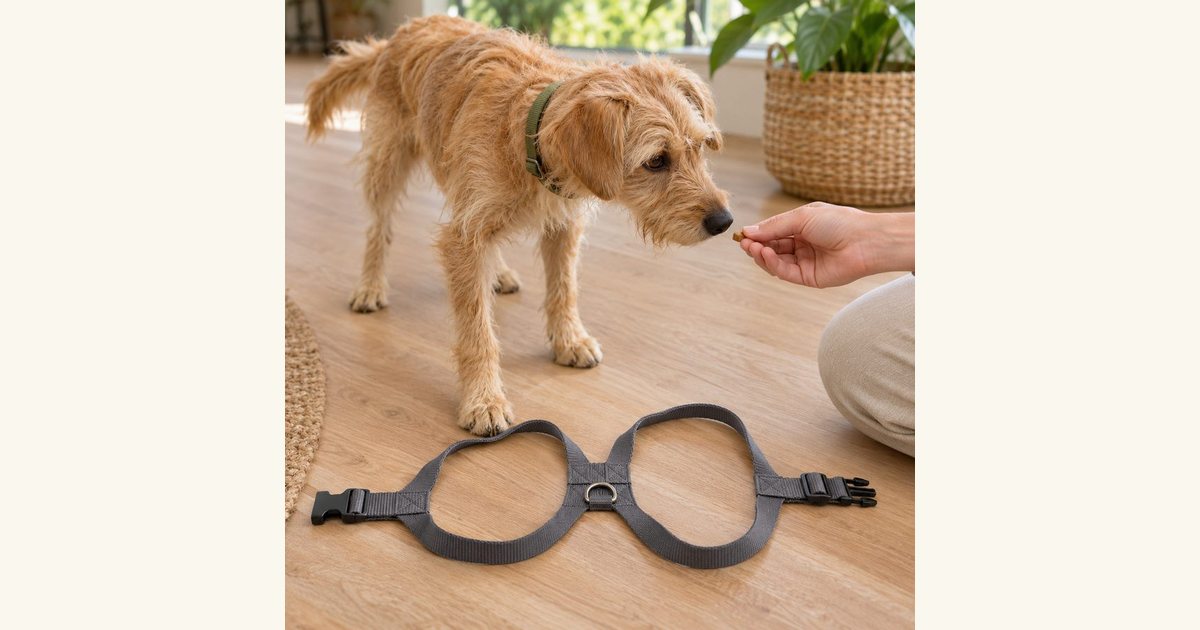
Lay the harness flat on the floor with the leg loops open. Reward your dog for looking at it or stepping near.
A flat harness is less worrying than one held in the air.
Toss a treat just past one loop so your dog walks over it. When a front paw lands inside the loop, say “yes” and reward.
Any paw inside a loop counts at first.
Once that happens easily, hold the loop open just above the floor and reward a paw stepping in.
Keep the loop low and still. Your dog moves the paw, not you.
When one paw is easy, open the second loop and reward the second paw going in. Let your dog step out freely.
On a later day, gently raise the harness around the body for a second without clipping. Lower it, let your dog step out and reward.
Clip only once raising is easy, and reward right after the clip sound.
Make it easier
Go back to rewarding interest in the flat harness, or work on one paw only. Stop if your dog avoids the harness or freezes. A clip-around or over-the-head style may suit some dogs better.
When to move on
Your dog walks over and places both front paws in the loops when you say the cue, and stays relaxed as you raise the harness. Then you can fasten the clips, reward and head out for a short walk.
If you get stuck
Your dog steps around the loop instead of into it
Lay the harness in a narrow space, such as beside a wall, so stepping in is the easy path, and reward any paw near the loop.
Your dog backs away when you raise the harness
Raise it only a little and lower it straight away, rewarding each time, before building height.
Your dog dislikes having a leg touched or lifted
Practise the Comfortable paws lesson on its own, and let your dog place each paw themselves rather than guiding it.