 koda
Why practise this?
Walks are more enjoyable for both of you when the lead stays soft. Rewarding the place beside you, often and early, teaches your dog where the good things happen.
What you need
- Begin only when your dog is comfortable wearing their fitted harness. For a step-in design, use Stepping into a harness first if needed. For other designs, get help with fitting and practise each part at home.
- Use a well-fitted harness and a lead about 1.5 to 2 metres long. A harness with a ring at the chest often helps dogs who pull. Avoid retractable leads, and never use check chains, prong or shock collars.
- Start at home or in a quiet, secure garden. You cannot teach loose lead walking while you need to get somewhere, so keep real walks short and sniffy while you practise.
- Have plenty of small, tasty rewards ready.
Practise together
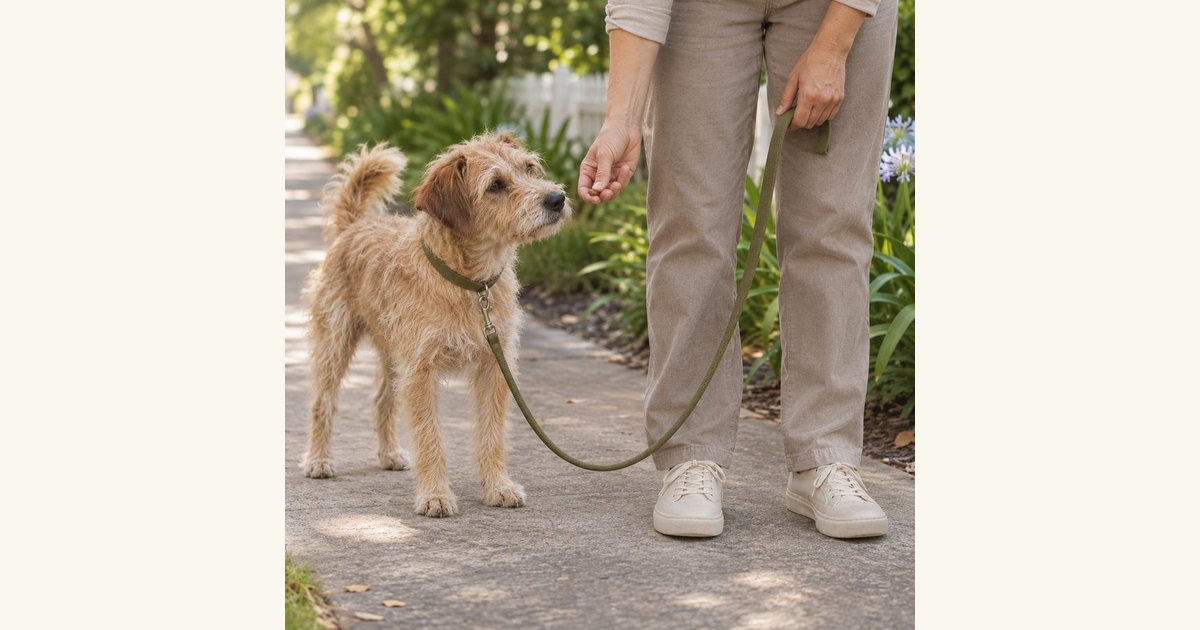
Stand still and reward your dog for choosing a place beside you with the lead loose.
Pick one side and reward on that side, so your dog knows where to be.
Take one or two steps. Mark and reward right beside your leg while they remain nearby and the lead stays slack.
Reward often at first, every step or two. You can space rewards out later.
If the lead tightens, stop without jerking it, or turn and walk the other way. Move again when it slackens and reward the next easy steps.
Stopping is information, not a punishment. Stay calm and wait.
Keep this first practice short. Add distance and busier places gradually over later comfortable sessions.
Finish while it is still going well, then let them have a good sniff.
Make it easier
Return to standing together somewhere quieter. If your dog is worried or frustrated, stop the exercise and give them space. Do not drag them into position.
When to move on
Your dog walks 10 steps beside you with a slack lead in a quiet place, 4 out of 5 tries across two sessions. Then add a few more steps, or try a quiet street.
If you get stuck
They zigzag from side to side
Reward only on your chosen side, right next to your leg, and reward more often for a while.
They pull towards every smell
Use sniffing as a reward. Walk a few loose steps, then say “go sniff” and let them explore. The Go sniff breaks lesson shows how.
They grab or bite the lead
This is usually excitement or frustration. Try a calmer place, shorter sessions and more frequent rewards, or give them a toy to carry.