 koda
Why practise this?
A dog who feels happy about the harness is much easier to get ready for walks. A few calm meetings before you ever put it on can stop a lifetime of ducking and backing away.
What you need
- Choose a quiet indoor space. Use a harness suited to your dog and check fit with an appropriate professional if uncertain.
- Have suitable rewards ready and keep the harness still.
Practise together
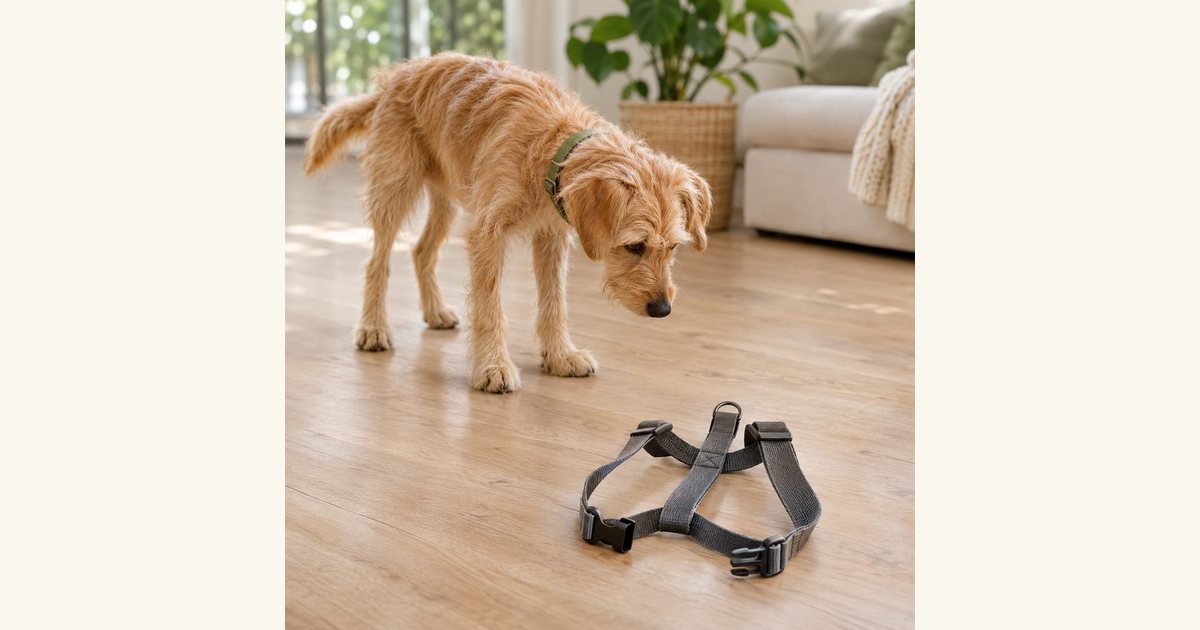
Place the harness where your dog can notice it without being crowded.
Put it down before your dog comes in, so it is just there, not pushed at them.
Reward calm interest, such as looking towards it. Your dog can investigate or move away.
Reward glances, sniffs or a step closer. Let them choose how close to go.
If they are comfortable nearby, briefly hold the harness still and offer a reward without asking them to put their head through.
Hold it low and still, away from their face. Reward, then lower it again.
Put the harness out of reach after a few comfortable moments. Save fitting and fastening practice for a separate session.
Ending while they are still curious makes the next session easier.
Make it easier
Increase the distance, or put the harness away and finish. Stop if your dog becomes tense or avoids it. Do not lure them into an opening and fasten it unexpectedly.
When to move on
Your dog walks up to the harness with a loose body and sniffs it happily when you bring it out, 4 out of 5 tries across two sessions. Then move on to Stepping into a harness, or Happy to see the lead.
If you get stuck
They back away or avoid it
Put it further away and toss treats away from it, then gradually closer over later sessions.
They grab it and chew it
Hold it a little higher, give them a chew to settle with first, and keep sessions very short.
The buckle sound startles them
Click the buckle quietly in another room or further away, then give a treat. Bring it closer only while they stay relaxed.