 koda
Why practise this?
Shaping a small change like this teaches your dog that trying something new pays off, which keeps training playful.
What you need
- Your dog should already offer a paw to your hand by choice.
- Choose a non-slip floor and have your dog sitting comfortably.
- Keep rewards small, as this one takes several short tries.
The cue
When the paw lift is steady, say “wave” just before you show your raised hand.
Practise together
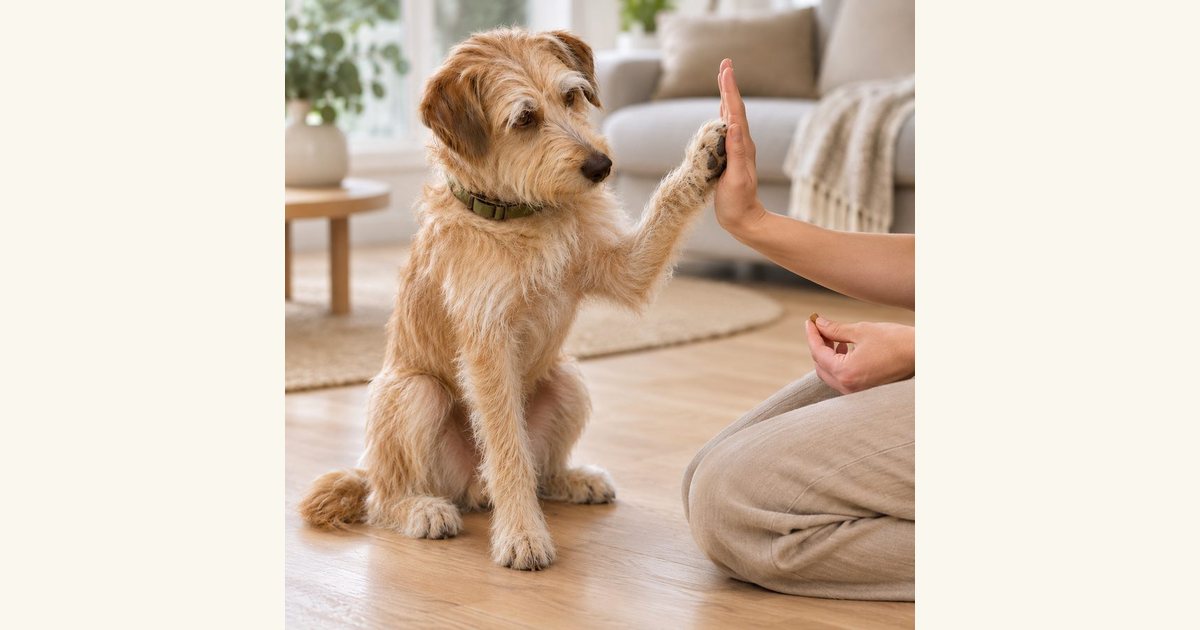
Offer your hand for a paw touch, as in high five. Say “yes” and reward the touch two or three times to warm up.
Now offer your hand a little higher and draw it back just before the paw reaches it. Say “yes” while the paw is in the air, then reward.
Your timing matters more than height. Mark while the paw is still up.
Repeat at the same height until your dog lifts the paw promptly each time.
Gradually show your hand from a little further away, so the lifted paw is clearly reaching for nothing. Mark and reward each lift.
Move your hand only a little at a time. If the paw stops lifting, go back closer.
Turn your hand into a small wave of your own. When your dog lifts the paw in response, say “yes” and reward.
Some dogs bob the paw up and down. Reward that extra movement when you see it.
Make it easier
Go back to rewarding paw touches on a low hand for a session, then try again with your hand only slightly out of reach. Stop if your dog gets frustrated or starts pawing at you.
When to move on
Your dog lifts a paw into the air when you wave, without needing to touch your hand. You can then add the word and fade your hand to a small signal.
If you get stuck
They keep reaching to touch your hand
Draw your hand back a little earlier, or say “yes” right at the start of the lift.
They stand up or jump
Lower your hand. Keep it near shoulder height so your dog can lift a paw comfortably while staying seated.
They stop offering anything
End on an easy paw touch and try again later. A few short tries work better than one long session.