 koda
Why practise this?
A clear release word means your dog always knows when a pause is finished. It is the start of every stay, and it keeps waiting fair and predictable.
What you need
- Start beside your dog in an already comfortable sit or down.
- Choose a quiet room, suitable rewards and a release word such as “free”.
The cue
Your release word, such as “free”, tells your dog the pause is over. Add “stay” once the short pause is easy. The quick “wait” used at kerbs and car doors is a separate word, taught in those lessons.
Practise together
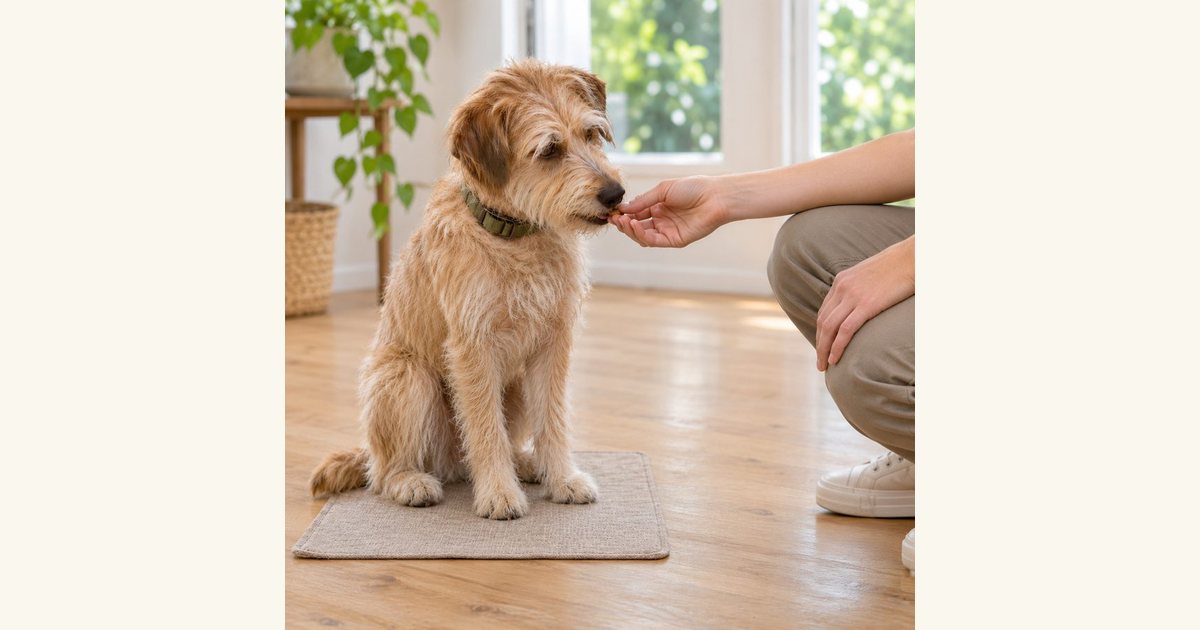
Reward them in position straight away. Say “free” and invite them to move for a break.
Reward while they are still in position, then release. That is what makes staying worthwhile.
On the next attempt, pause for one second before rewarding in position. Release again.
One second is a real achievement at the start.
Repeat only while they remain comfortable. Once the short pause is reliable, say “stay” once before it.
Say “stay” once only. Repeating it does not help them hold on longer.
Increase duration in tiny steps over later sessions. Keep distance and distractions easy while you work on the pause.
Change only one thing at a time: time, distance or distraction.
Make it easier
If they get up early, calmly reset and shorten the pause. Never hold them in position. A release cue is a clear finish, not a reason to keep a worried dog waiting.
When to move on
Your dog holds a comfortable sit or down for three seconds beside you until you say “free”, 4 out of 5 tries across two sessions. Then move on to Stay: a little longer.
If you get stuck
They get up before the release
Make the pause shorter and reward sooner. Calmly reset without telling them off.
They do not move when you say “free”
Toss a reward a little way off or take a step back to invite them to move.
They lie down from a sit
That is fine if they are more comfortable. Choose whichever position is easiest for them.