 koda
Why practise this?
Jumping up is usually friendly excitement. A calm hello keeps guests, children and older visitors safe, and helps your dog enjoy company.
What you need
- Practise first with one calm adult visitor who has agreed to follow your plan.
- Set up a gate or closed door, a lead if needed, and a small pot of rewards by the entrance.
Practise together
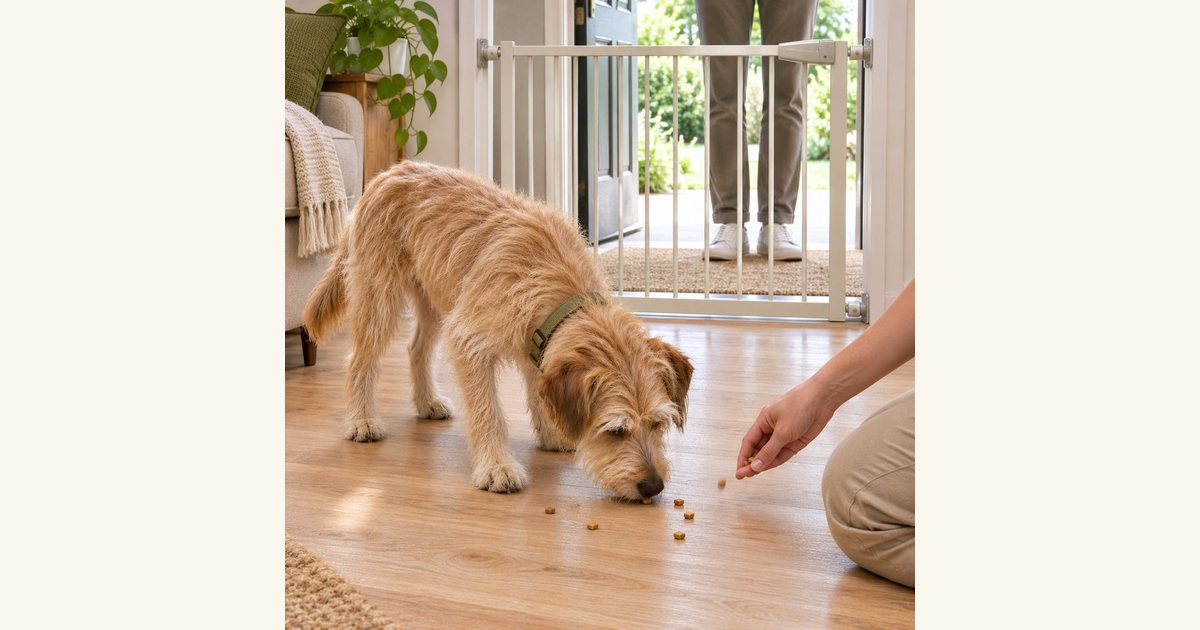
Keep your dog behind a gate or on lead as the visitor comes in. Scatter a few rewards on the floor to keep their nose busy.
Sniffing for treats helps excitement fade.
Let the visitor come in and sit down first. Wait until your dog looks calmer before bringing them in.
Guests standing in the doorway are far more exciting.
Let your dog approach. While all four paws are on the floor, the visitor says a soft hello and drops a reward low.
A short stroke on the chest is fine, if your dog wants it.
If your dog starts to jump, the visitor stands and turns away quietly. Toss a reward on the floor to reset.
No pushing, kneeing or telling off. Just less attention.
Keep the hello brief. Call your dog away for a reward, then let them choose whether to go back and say hello again.
Ending early keeps the greeting calm.
Make it easier
Keep your dog behind the gate with a chew while the visitor ignores them. Skip greetings with children or frail visitors until your dog is reliably calm.
When to move on
Your dog keeps four paws down for a short hello with a familiar visitor. Then try with a new adult, still using the gate at the start.
If you get stuck
They are too excited to take treats
Wait longer behind the gate with a chew, and bring them in only once they can sniff and eat.
Visitors keep encouraging jumping
Share a simple plan before they arrive, or keep your dog behind the gate for that visit.
Your dog barks at or avoids visitors
This may be worry rather than excitement. Let your dog keep their distance and ask your vet about a qualified reward-based trainer.