 koda
Why practise this?
Tug is great exercise and builds your bond. A pause in the game teaches your dog to let go easily, even when excited.
What you need
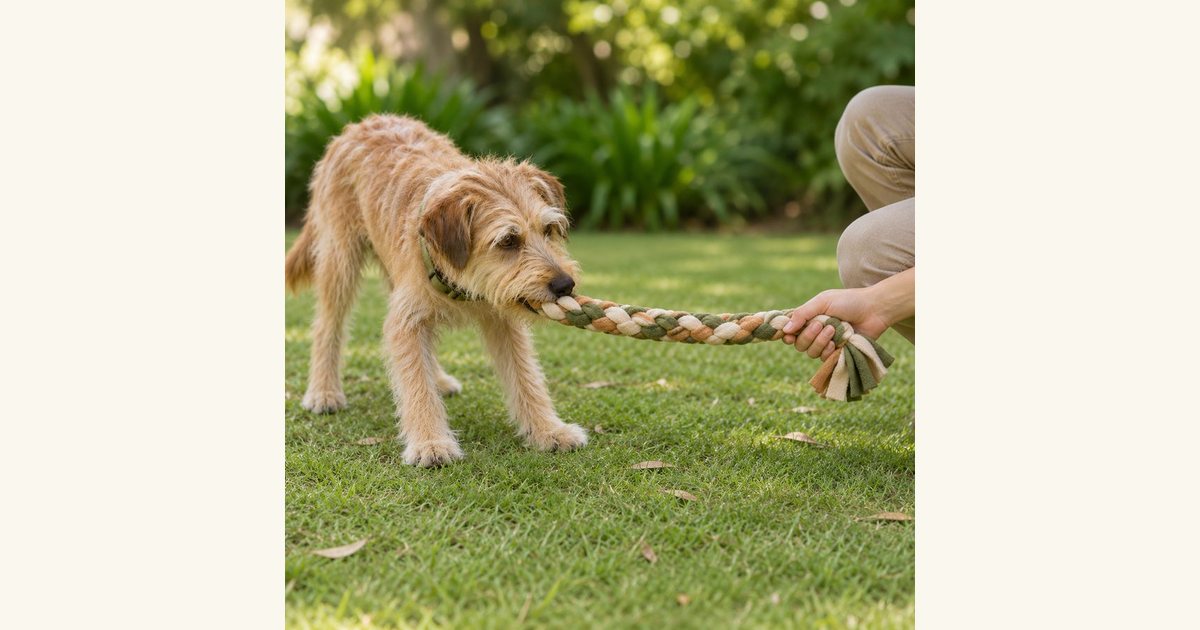
- Use a long, soft tug toy so hands stay well away from teeth.
- Play with one dog at a time in a clear space, away from children.
- Tug suits dogs who do not guard toys. If yours does, choose a different game.
The cue
Once your dog lets go soon after you go still, say your drop word, such as “drop”, just before you pause.
Practise together
Offer the toy and say “take it”. Play gently, moving the toy side to side, low to the ground.
Let your dog do the pulling. Keep your movements smooth, never lifting or jerking.
After a few seconds, stop moving. Hold the toy still against your leg and stay quiet.
Being a little boring is the key. Do not pull back or say anything.
The moment your dog lets go, say “yes” and restart the game straight away by offering the toy again.
More tug is the reward for letting go.
If they keep holding on, wait. If they still do not let go, put a food reward on the floor beside them as a swap.
Let your dog win the toy now and then, and end the session on a release with a reward.
Make it easier
Keep play very gentle and short, and pause sooner. If teeth touch your skin, calmly end the game, take a short break and restart more gently. Stop if your dog guards the toy.
When to move on
Your dog lets go within a couple of seconds of you going still, then waits for the game to restart. You can add your word and try livelier play.
If you get stuck
Teeth touch your hand
Calmly stop the game for a short break. Use a longer toy and hold it further from the end they grab.
They will not let go
Stay still and patient, then offer a tasty swap. Practise drop it on its own before tugging again.
They get too wound up
Keep rounds short, pause more often and finish with a calm scatter of food.