 koda
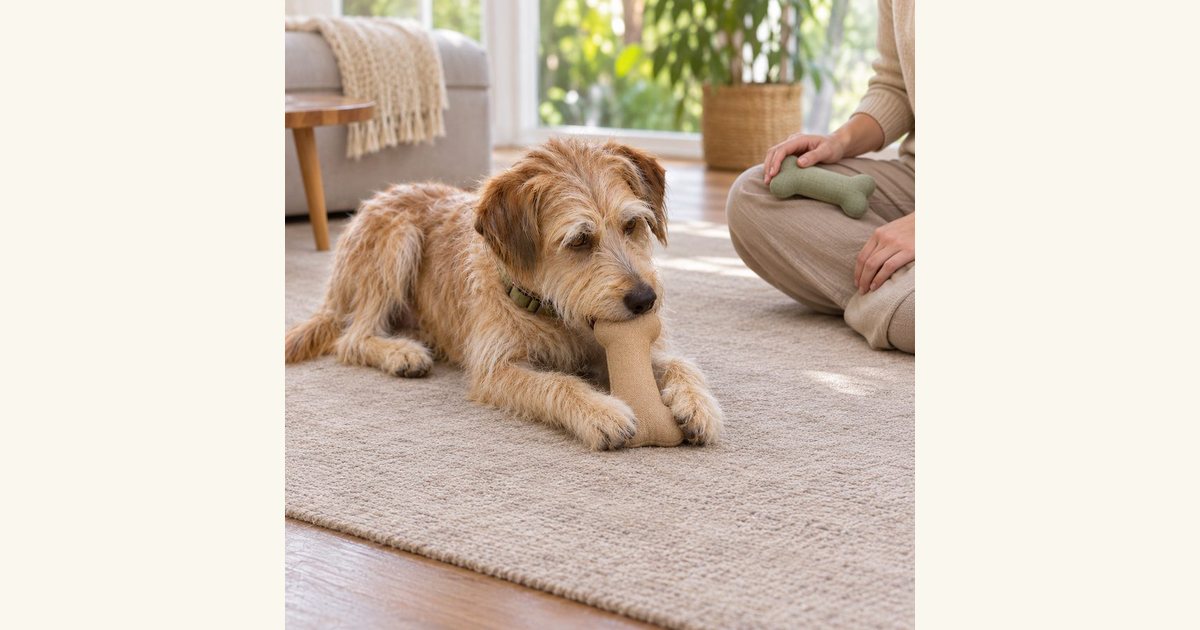
Why practise this?
Swapping teaches your dog that letting go of something is good news, not a loss. That helps prevent guarding, and it makes it easier to get dangerous things back safely.
What you need
- Choose a safe toy your dog likes but does not guard, plus suitable food rewards.
- Work with one dog, away from children and other pets. Keep hands away from their mouth.
The cue
Once your dog lets go reliably, say “swap” once, just before you offer the food.
Practise together
Let your dog enjoy the toy briefly while their body stays relaxed.
Choose a toy they enjoy but can take or leave. Their very favourite can wait.
Offer a food reward on the floor nearby. Let them choose to release the toy to collect it. Do not pull the toy away.
Put the food right by their nose at first, so the swap is easy.
Let them eat the reward and leave the toy available so the game can continue.
Giving the toy back is a big part of the reward.
Finish after a few easy exchanges. In a later session, once the exchange is predictable, say “swap” just before offering the food. Keep rewarding each release.
A second, identical toy works as a swap too, if your dog prefers toys to food.
Make it easier
If your dog keeps the toy, end the attempt without chasing or prying. If they freeze, growl or become tense, give space and stop this lesson. Follow the guarding guide before trying again.
When to move on
Your dog lets go of the toy within a couple of seconds when you offer the food, then happily goes back to the game, 4 out of 5 tries across two sessions. Then add the word “swap”, or move on to Drop it, for a good swap.
If you get stuck
They will not let go
Use a tastier reward and a less exciting toy. Hold the food still near their nose and wait.
They run off with the toy
Do not chase. Play in a smaller room, and keep a second toy to make the game more fun with you.
They snatch the food
Offer it on the floor or a flat palm, and practise Take treats gently on its own.