 koda
Why practise this?
A target stick lets you guide your dog onto a mat, past a distraction or into the car without bending down or luring with food.
What you need
- Use a target stick or a wooden spoon. Avoid anything sharp or easy to chew.
- Your dog should already enjoy hand touch.
- Keep small rewards in your other hand or a pouch.
The cue
Once your dog touches the stick reliably, say “touch” just before you present it.
Practise together
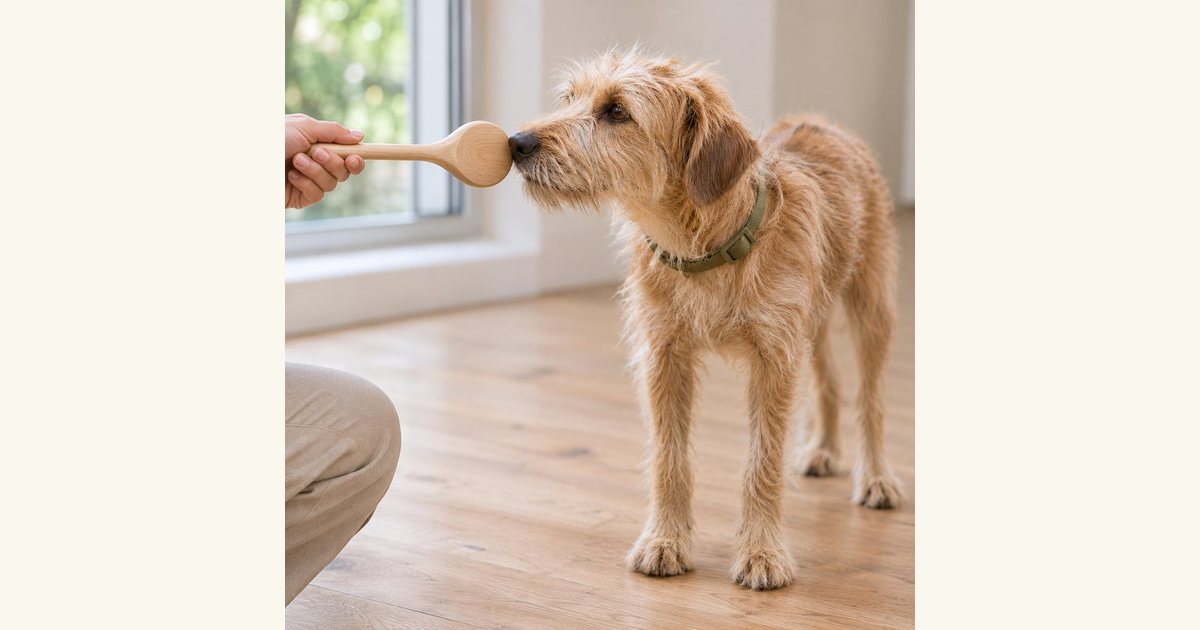
Hold the end of the stick still, a short distance in front of your dog’s nose. When they sniff or touch it, say “yes” and reward.
Let them move to the stick. Never push it towards their face.
Repeat, presenting it a little to the left, right, higher and lower, still close by.
Now move the stick a few centimetres away as they reach for it, so they follow to touch. Mark and reward the touch.
If they start mouthing the stick, mark a moment earlier, as they move towards it.
Gradually move the stick further, a step or two at a time, so they walk to follow it before touching.
Practise guiding them in a short line or a gentle curve, rewarding each touch.
Make it easier
Hold the stick closer and keep it still. Stop if your dog seems wary of the stick, and go back to hand touch.
When to move on
Your dog follows the stick for a few steps and touches it on cue. You can use it to guide them onto a mat or along beside you.
If you get stuck
They bite or chew the stick
Mark earlier, before contact, and use a stick with a smooth, hard end.
They watch you instead of the stick
Keep rewards out of sight, present the stick, then wait quietly.
They lose interest when it moves
Move it only a short way and reward more often.