 koda
Why practise this?
A dog who can take a treat gently makes everyday training more comfortable for you both.
What you need
- Use small, firm rewards that do not stick to your fingers.
- Sit or kneel in a quiet spot at a time when your dog is calm, not overexcited.
- An adult handles the food for this exercise. If teeth have touched a child’s fingers, have the child help from the other side of a closed gate.
The cue
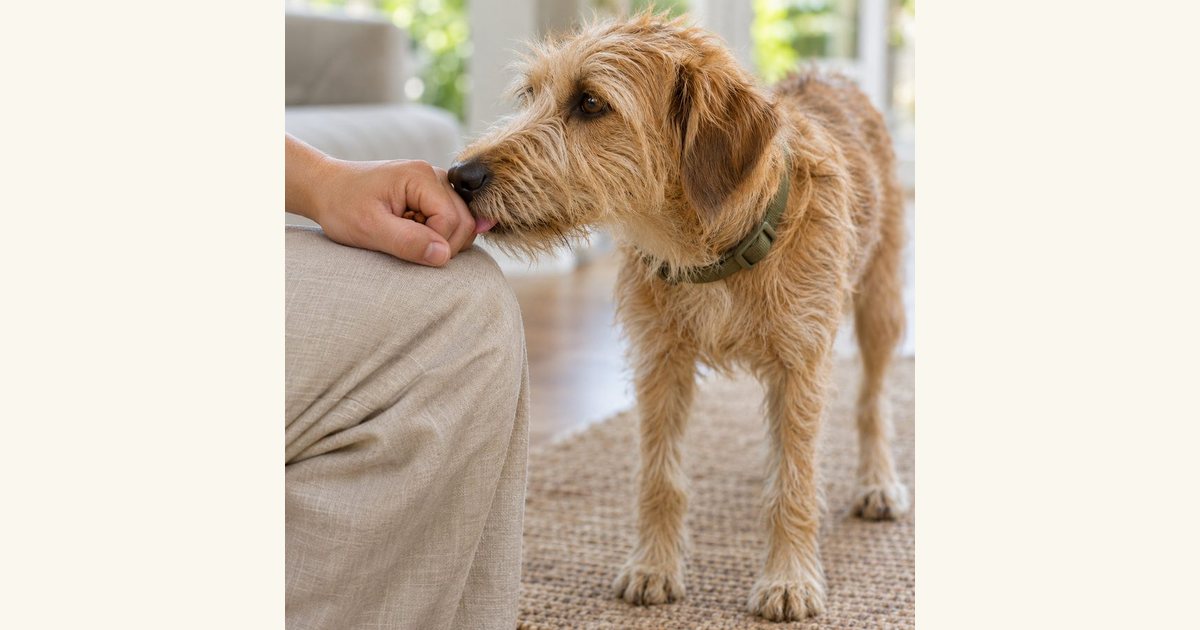
Once your dog takes treats softly, say “gentle” quietly as you offer each one.
Practise together
Hold a few treats in a loosely closed hand, resting on your knee. Let your dog sniff and lick.
Keep your hand still. The moment they back away even slightly, open your hand a little.
Catching that small lean back is the key moment.
If they move in again, close it softly. When they hold back, bring one treat to their mouth.
Bringing the treat to them avoids inviting a lunge.
Repeat calmly without talking, so they can work it out for themselves.
When this is easy, offer a treat between finger and thumb, low and slow, and give it while they stay calm.
For very grabby dogs, a treat on a flat open palm is a good middle step.
Make it easier
Offer treats on a flat palm or drop them on the floor for now. Use less exciting treats and practise when your dog is calmer. If they paw or nibble hard, tuck your hand behind your back for a few seconds, then try an easier version.
When to move on
When your dog takes treats softly from you several times in a quiet place, another trusted adult can start with the easiest version. Children can help prepare the rewards away from the dog.
If you get stuck
They nibble or paw at your hand
Move your hand behind your back for a moment, then offer the closed hand again a little further from their nose.
They are only grabby in exciting moments
Toss rewards on the floor during play or busy times, and practise hand delivery when things are quiet.
Children are getting nipped
Stop having children feed the dog. An adult can deliver treats on the floor. The child can count out rewards for the adult on the other side of a closed gate. Ask your vet or a qualified reward-based behaviour professional for help with repeated nipping.