 koda
Why practise this?
A relaxed stay helps in everyday moments, such as at the kerb, when the front door opens or while you clip on the lead.
What you need
- Your dog should already manage a short pause and a release word from the wait lesson.
- Choose a quiet room and a comfortable surface, with small rewards ready.
The cue
Say “stay” once at the start. Keep your release word, such as “free”, to tell them when it is finished.
Practise together
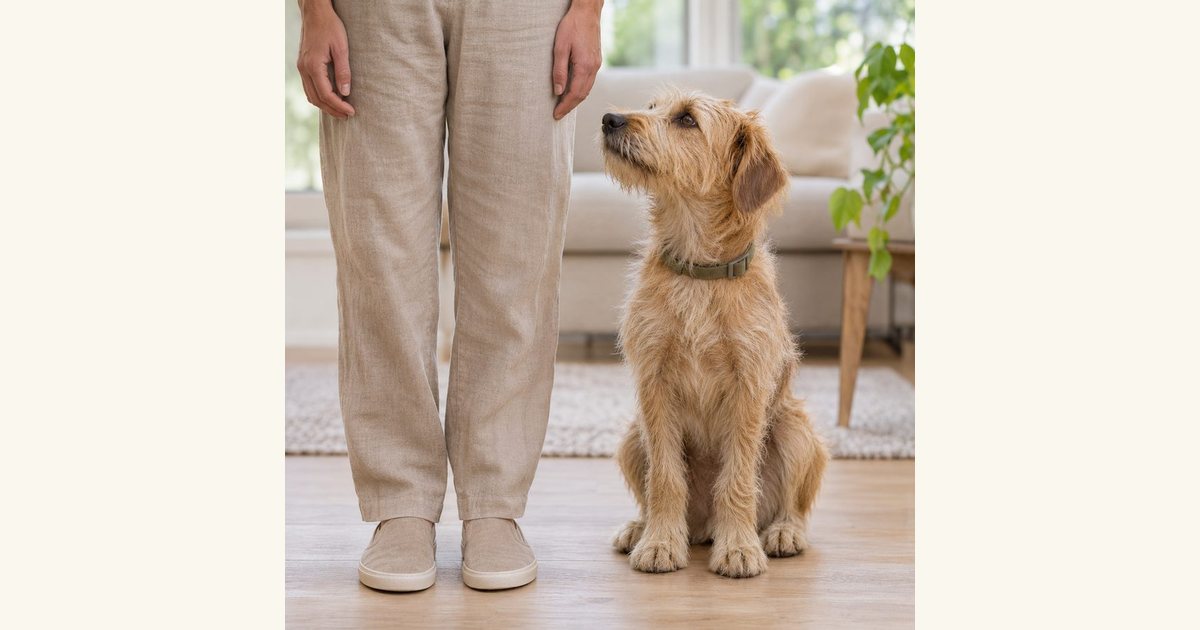
Ask for a sit or down your dog finds comfortable. Say “stay” once and stand still beside them.
A down is often more comfortable for longer stays.
After two seconds, say “yes” and give a reward while they are still in position. Then say “free”.
Bringing the reward to them teaches that staying put is how to earn it.
Repeat, building to three seconds, then five. Reward in position each time before the release.
For longer stays, give a few calm rewards spaced through the stay.
Mix it up. Try five seconds, then two, then six, then three, so the stay does not always get harder.
Finish with an easy short stay and a release, then have a play or a sniff together.
A minute or two of practice is plenty.
Make it easier
Go back to one second and reward more often. If they keep getting up, they may be tired or uncomfortable. End with something easy and try another day.
When to move on
When your dog holds a relaxed stay for about ten seconds with you beside them, you can start adding a single step away.
If you get stuck
They get up before you reward
Calmly reset without fuss and halve the time on the next try. Only reward while they are in position.
They get up when your hand moves
Keep your reward hand still by your body until the moment you mark.
They creep forward
Shorten the stay and deliver rewards right at their nose so there is no reason to move.