 koda
Why practise this?
Real life is busy. A stay that holds when a toy rolls by or someone walks past is far more useful at the door, the vet or a café.
What you need
- Your dog should hold a relaxed stay with you a few steps away in a quiet room.
- Choose extra tasty rewards and plan two or three small distractions, such as a dropped glove or a slowly rolled toy.
The cue
Keep using the same “stay” and release word, each said once.
Practise together
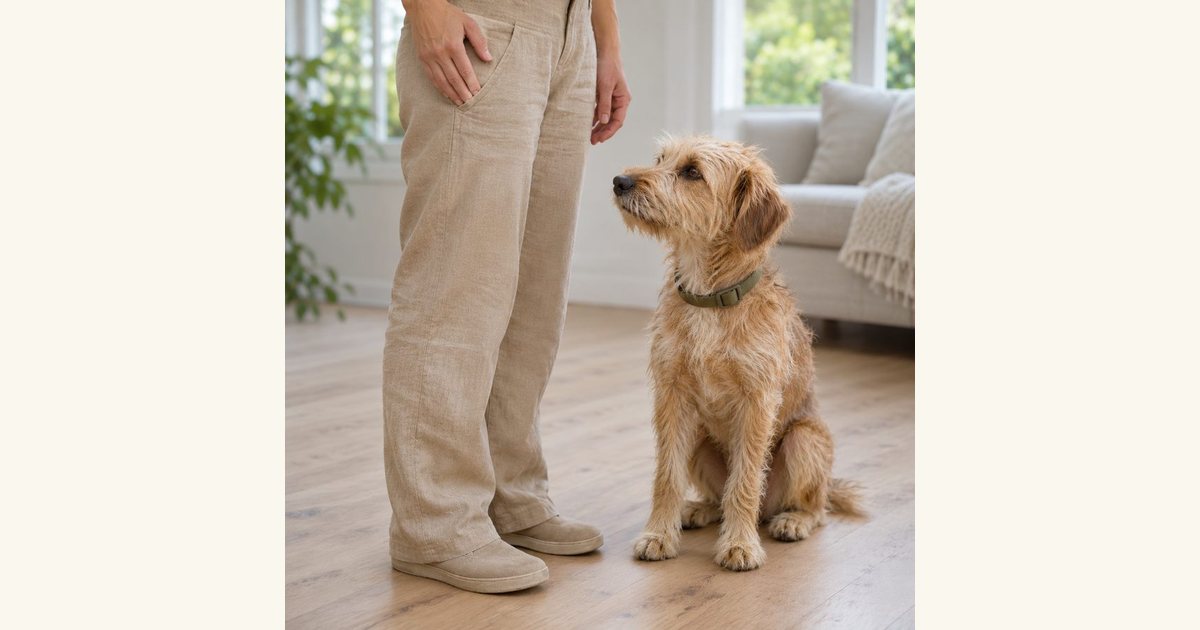
Stand beside your dog and ask for a stay. Make a tiny distraction, such as shifting your weight or touching your pocket, then mark and reward.
Keep the stay very short while you introduce distractions.
Try a slightly bigger one, like gently placing a glove on the floor a little away from them. Mark and reward if they stay.
Release with “free” after each success, and let them sniff the glove if they like.
Letting them check it out afterwards takes away some of the pull.
Over later sessions, add a slowly rolled toy, a person walking past at a distance, or a short practice in the garden.
Change only one thing at a time: distraction, distance or duration.
When the place gets busier, stand closer and keep stays shorter. Then build up again.
Tastier rewards help in harder places.
Make it easier
Use a smaller distraction, stand right beside your dog and reward quickly. If they cannot settle, move somewhere quieter or finish with an easy win.
When to move on
When your dog holds a short, relaxed stay as a person walks past or in a quiet outdoor spot, try a new place at a calm time of day.
If you get stuck
They break the stay to chase the toy
Roll the toy further away and more slowly, or keep it still. Reset calmly and make the next one easier.
They are fine at home but not outside
New places are harder. Go back to standing beside them for a second or two, with no added distraction.
They seem anxious when people pass
Give them more distance and skip stays around people for now. Worry around people is worth discussing with a qualified reward-based trainer.