 koda
Why practise this?
A comfortable stand makes examinations, brushing and towel drying easier and less stressful for your dog and the people helping them.
What you need
- Choose a non-slip surface such as a rug or a mat.
- Start with your dog in a comfortable sit, and have small rewards ready.
The cue
Once your dog follows your empty hand into a stand, say “stand” once just before the hand signal. Let your vet know the word you use.
Practise together
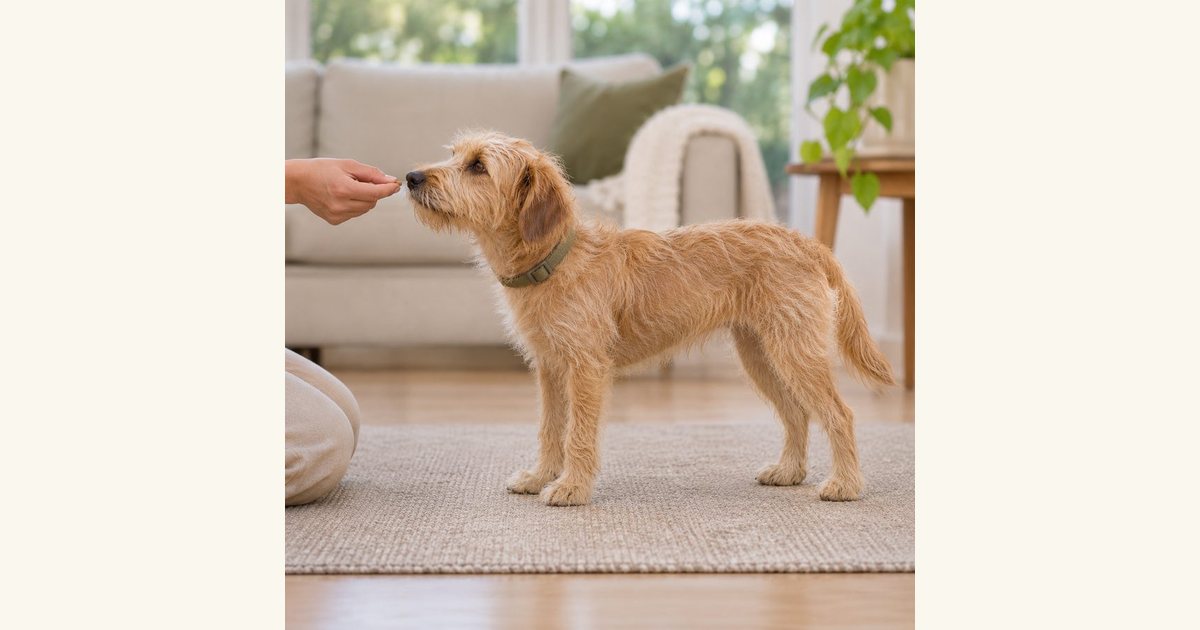
Hold a reward at your dog’s nose, then slowly move it straight forward, level with their nose.
Keep your hand low. Too high invites a sit or a jump.
As they step up into a stand, say “yes” and give the reward while they are still standing.
Rewarding in the stand teaches them that standing is what earns it.
Say “free” and let them move or sit as they like. Repeat a few times.
When the stand is easy, use the same movement with an empty hand. Mark the stand and reward from your other hand.
If they hesitate, go back to a few rounds with the reward in your hand.
Over later sessions, wait a second or two in the stand before you mark, building time very gradually.
Add gentle touches, like those in the handling lessons, once the stand is steady.
Make it easier
Reward any shift of weight forward, or start from a down if rising from a sit is hard. Stop if standing looks uncomfortable for them.
When to move on
When your dog stands on your word or signal and stays relaxed for a few seconds, try adding a brief, gentle touch to a shoulder or side before you reward.
If you get stuck
They stay stuck in the sit
Take a small step backwards as you move your hand, or start while they are already standing and simply reward the stillness.
They walk forward instead of stopping
Move your hand a shorter distance and mark the moment all four feet are under them.
They sit as soon as you reward
Deliver the reward at nose height and slightly forward, so they stay up to eat it.