 koda
Why practise this?
Sit pretty builds core strength and balance in suitable adult dogs, and it is a calm way to ask for attention instead of jumping up.
What you need
- Practise on carpet or a non-slip rug, not a sofa or bed.
- Your dog should sit reliably on cue.
- Only try this with a healthy adult dog who balances comfortably. Skip it for growing puppies or dogs with back, hip or joint problems. Ask your vet if unsure.
The cue
Once your dog reaches the position steadily, say “sit pretty” just before you raise your hand.
Practise together
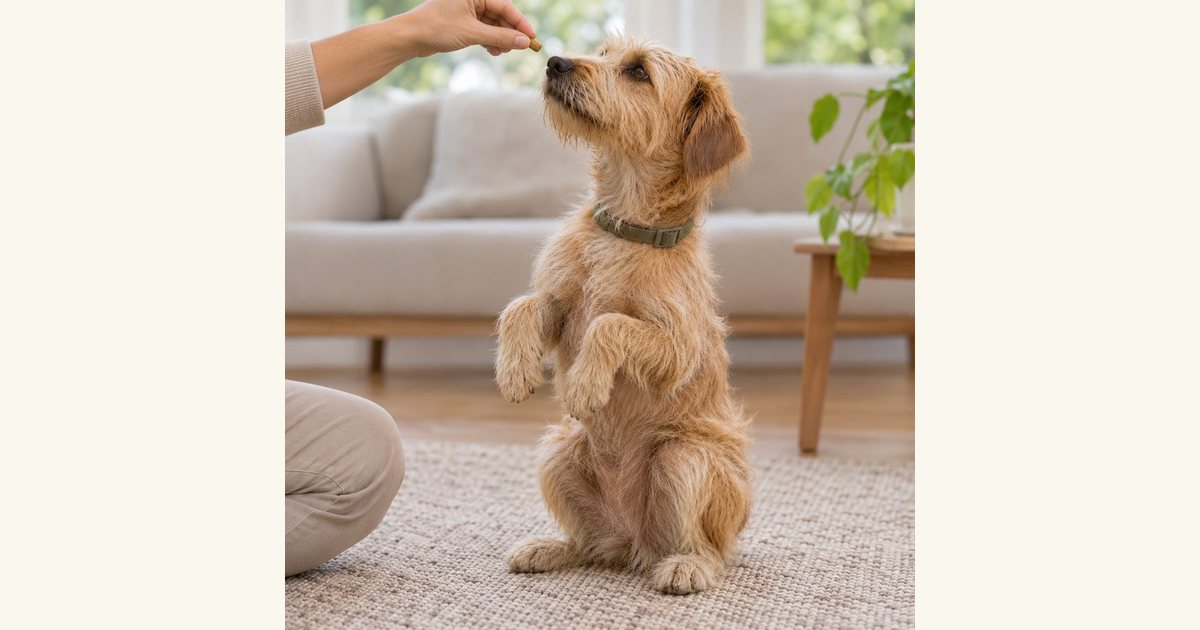
Ask for a sit. Hold a reward at your dog’s nose and raise it slowly, just a little above their head.
The moment one or both front paws lift off the floor, say “yes” and reward.
A tiny lift is plenty at first. Mark it before they stand up.
Over several sessions, raise the reward a little higher, so they rock back onto their hips with their front paws up.
If they stand on their back legs, your hand is too high or too fast. Lower it.
Keep each balance brief. Reward, then let them return to all four paws.
A second or two is plenty. Short holds protect their back.
Once the position is steady, lure with an empty hand and reward from your other hand.
Make it easier
If your dog wobbles, strains or hesitates, stop. Try Touch my hand on four paws instead.
When to move on
Your dog sits back with a straight back and front paws up for a second or two to a small upwards hand signal, without wobbling.
If you get stuck
They stand up on their back legs
Lower your hand and move it more slowly. Mark as soon as the paws lift.
They topple sideways
Stop the exercise and let your dog stand normally. Try Touch my hand with all four paws on the ground instead. Ask your vet about any difficulty balancing.
They lift one paw only
Reward it. Many dogs lift one paw first, and the second follows as balance improves.