 koda
Why practise this?
A sit is a simple, polite way for your dog to ask for things, and a calm starting point for many other skills. Teaching it with a lure that you quickly fade means your dog learns the signal, not just to follow food.
What you need
- Choose a non-slip surface and small rewards.
The cue
Say “sit” once, just before your hand signal. Later, you can try the word on its own.
Practise together
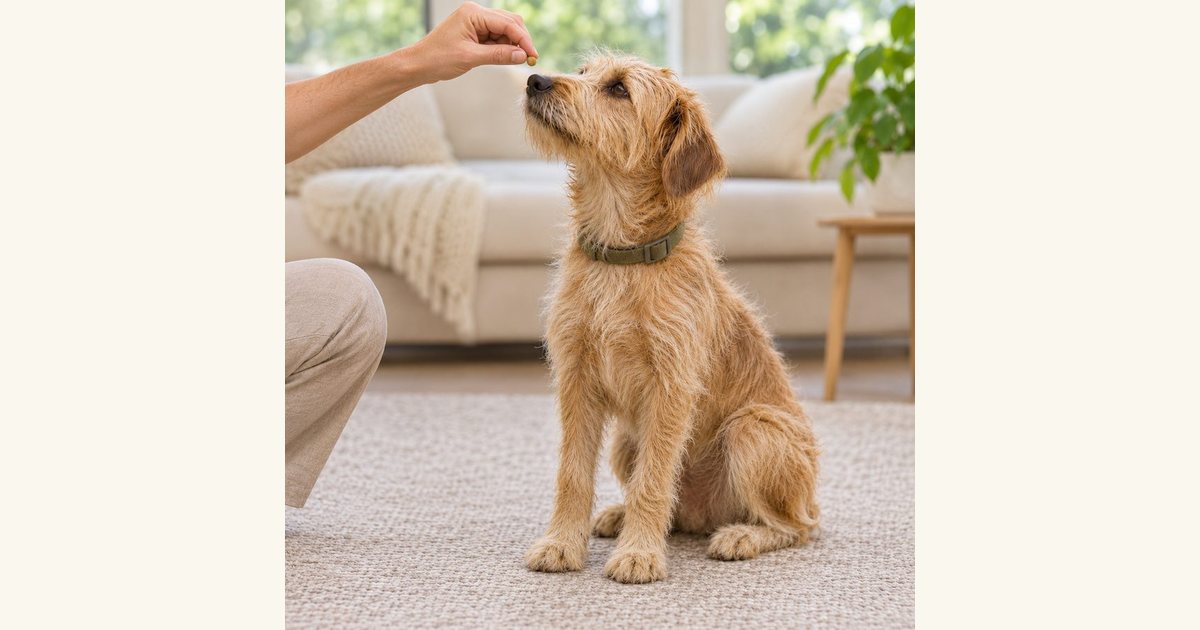
Move a treat slowly from the nose a little upwards and back.
Keep the treat close to their nose, like a magnet. If it goes too high, they may jump.
As their bottom reaches the floor, say “yes” and reward. Do not push them down.
Mark the moment their bottom touches the floor, then give the reward.
When that is easy, try the same gesture with an empty hand. Still mark the sit and reward from your other hand.
Aim to use an empty hand within a few sessions. If they get stuck, use the treat for one or two goes, then try empty again.
Once the hand signal is reliable, say “sit” just before it. Finish after a few comfortable attempts.
Say the word first, pause, then give the signal. Over time they will start sitting on the word.
Make it easier
Lower the lure if they jump. Stop if sitting looks uncomfortable.
When to move on
Your dog sits when you say “sit” and give a small hand signal with no treat in that hand, 4 out of 5 tries across two sessions in a quiet room. Then try another room, or with you standing a little further away. Stay, then free builds on this.
If you get stuck
They jump up at the treat
Hold the treat lower and move it more slowly, just above their nose.
They walk backwards instead of sitting
Practise with their back near a sofa or wall, so moving back is not an easy option. Move the treat even more slowly.
They only sit when they can see food
Go back to the empty hand step and reward from a pouch or your other hand. Mix in praise and play as rewards too.