 koda
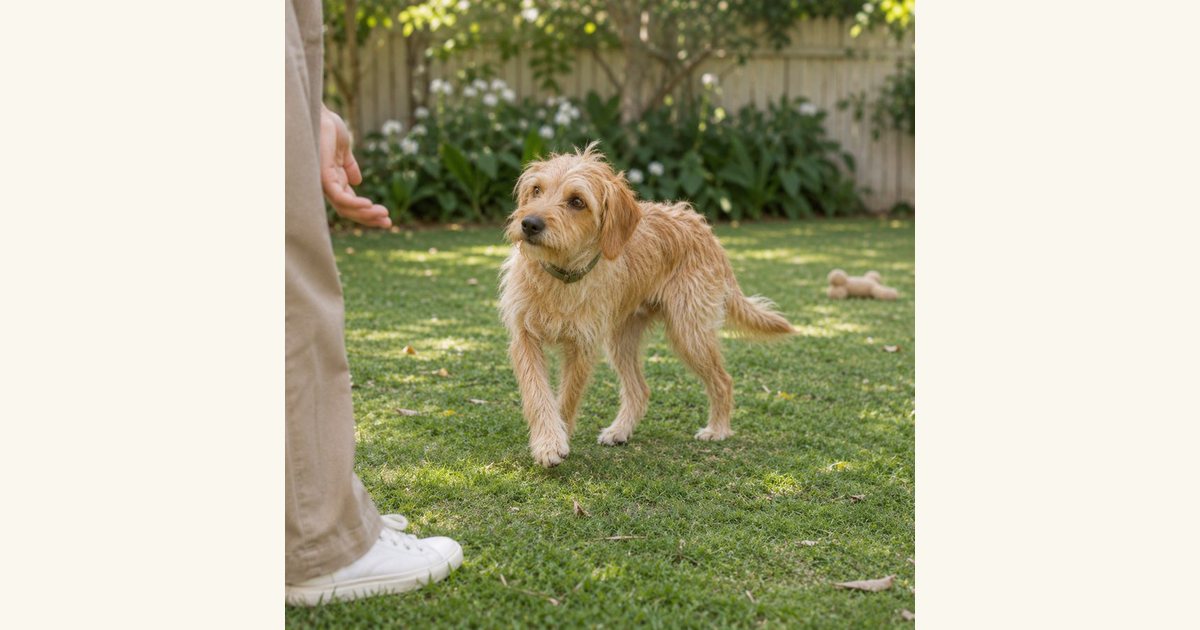
Why practise this?
Real recalls happen when something else is interesting. Small, easy wins build a habit of coming back that holds up better outside.
What you need
- Work indoors, in a secure garden or on a long line clipped to a harness.
- Choose a mild distraction, such as a plain toy on the floor, and have your best rewards ready.
The cue
Use the recall word you already practise. Say it once.
Practise together
Let your dog notice the distraction from a few steps away. Call them once while they are only mildly interested.
Calling early, before they are absorbed, sets them up to succeed.
As they turn towards you, say “yes”. Reward generously when they reach you.
A happy voice and a step backwards make coming to you more inviting.
Say “go play” and let them go back to the distraction. Being allowed back is part of the reward.
Only use distractions that are safe to return to.
Repeat a few times. Move a little closer to the distraction only if they come back quickly each time.
If they don’t come, the distraction is too strong for now.
Over later sessions, try a slightly more interesting distraction, starting from an easy distance again.
Change only one thing at a time.
Make it easier
Add distance from the distraction or choose something less interesting. If they don’t respond, calmly collect them and make the next try easier. Never punish a slow return.
When to move on
Your dog turns away on the first call from a mild distraction, every time. Then try a slightly stronger distraction, or the same one in a new safe place.
If you get stuck
They ignore the call
Don’t keep repeating it. Calmly go and collect them, then try again with more distance or a milder distraction.
They grab the reward and dash straight off
Hold the reward close to your body so they come right in, and give a few rewards in a row.
They slow down because they expect the fun to end
Send them back to the distraction more often than you end the game.