 koda
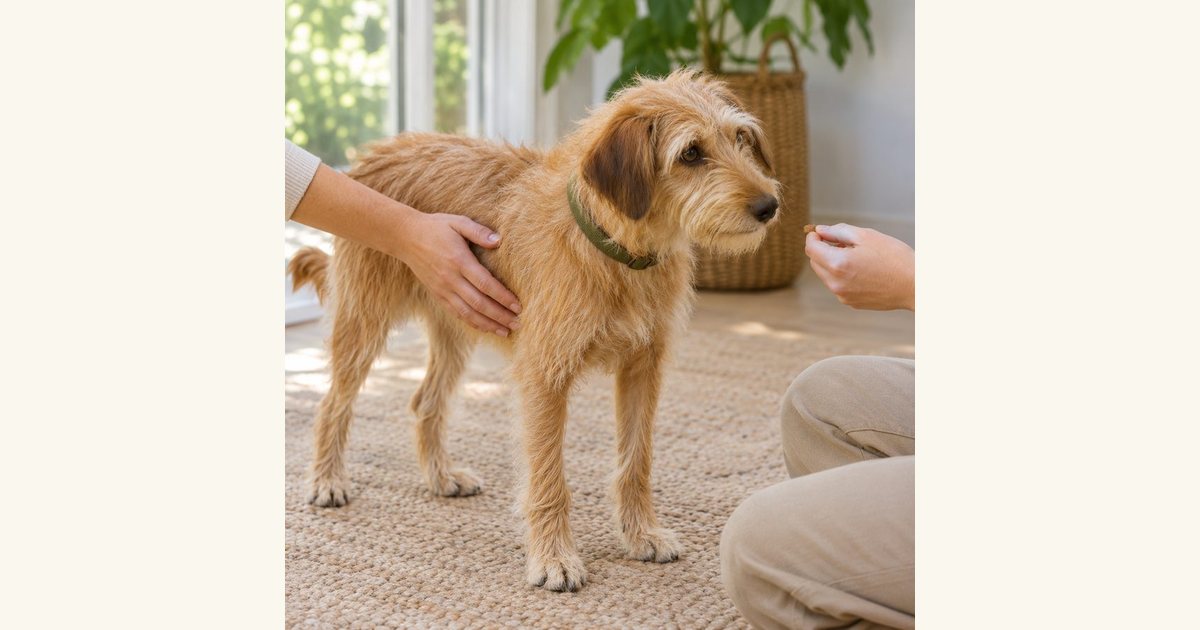
Why practise this?
Most bites to children come from a familiar dog, often during patting or cuddles. Asking your dog first, and respecting the answer, keeps touch enjoyable and safe for everyone.
What you need
- Choose a calm moment when your dog has come to you by choice.
- Sit on the floor or a low chair, rather than leaning over your dog.
Practise together
Invite your dog over. Stroke their chest or side gently for about three seconds.
Chest and sides are usually more comfortable than the top of the head.
Stop and take your hand away. Rest it in your lap.
The pause is the important part. It gives your dog a chance to answer.
Keep your hands still and wait. If your dog nudges your hand or leans back into you with a loose body, offer another short stroke. If they simply stay nearby, keep waiting. If they turn away, lick their lips, freeze or leave, give them space.
Yawning, a whale eye or ears pinned back are quiet ways of saying no.
Respect the answer every time. Give more strokes for a yes, or let them go for a no.
A dog who knows they can say no is often happier to say yes.
Let one adult practise at a time. Children can watch and point out when your dog asks for more or needs space. For lifting, work through Being picked up comfortably as a separate exercise.
Children can say the steps out loud: pet, pause, ask.
Make it easier
Keep strokes to one or two seconds, and practise only with one adult for now. If your dog walks away every time, give them more space and let them choose when to come back.
When to move on
Each family member can describe your dog’s “yes” and “no” signals, and everyone pauses without being reminded.
If you get stuck
Your dog always walks away
They may prefer less touch, or be sore. Try shorter strokes at quieter times, and check with your vet if it is new.
The children forget to pause
Have the adult do the stroking. The child can count to three and watch what the dog does when the adult takes their hand away.
Your dog nudges for more over and over
If your dog nudges with a loose body, you can give another short stroke. When you are ready to finish, say a calm “all done” and rest your hands.