 koda
Why practise this?
Puppies who feel comfortable on lots of surfaces tend to cope better with vet tables, wet grass, shiny floors and bridges later on.
What you need
- Pick one new, stable surface such as a rubber mat, a folded towel or a flattened cardboard box, and lay it flat on the floor.
- Have small rewards ready and choose a time when your puppy is relaxed.
Practise together
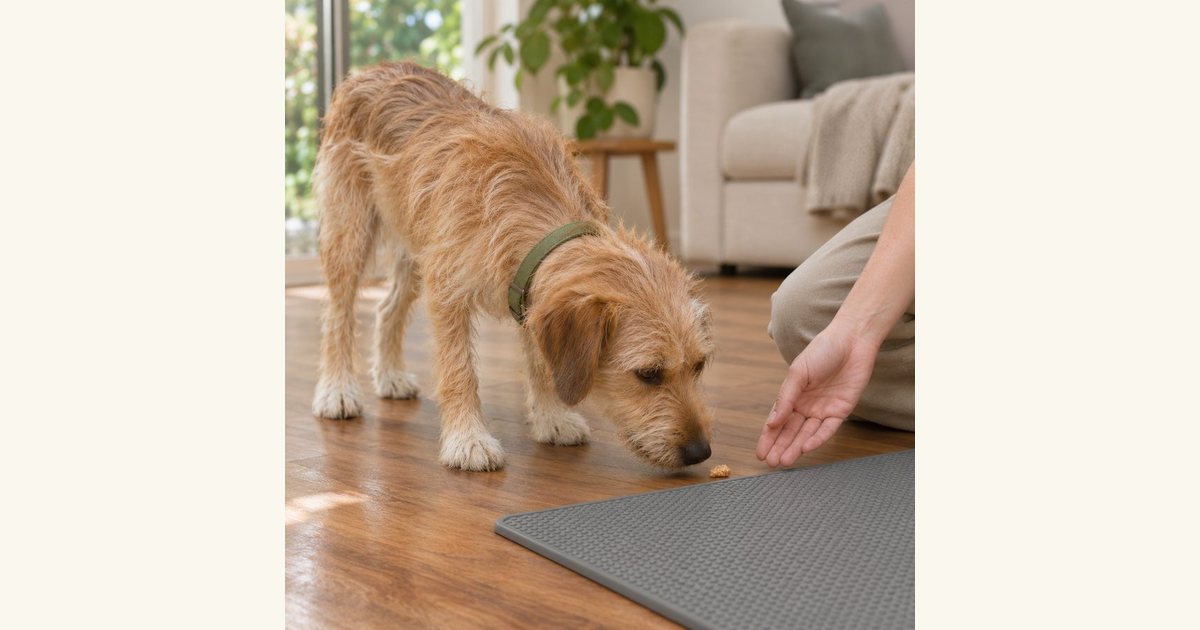
Place the surface in a familiar room. When your puppy looks at it or sniffs it, say “yes” and drop a reward near the edge.
Drop the next reward right on the edge. Let them choose whether to step on with a paw.
Never lift or push your puppy onto the surface.
If they step on, say “yes” and reward. If they stay off, that is fine. Reward the interest instead.
Some puppies sniff for a long time first. Give them that time.
Over a few turns, place rewards a little further onto the surface while they look comfortable.
Keep the surface flat and still. Wobbly surfaces can wait until much later.
End after a few relaxed moments. Next time, try a different texture.
One or two new things per session is plenty.
Make it easier
Use a smaller, flatter surface, or scatter rewards a little away from it so they can investigate from a distance. If they back away, freeze, lick their lips or hide, stop and try again another day.
When to move on
When your puppy walks across a new surface without hesitating, try another texture, or the same surface in a new place such as the garden.
If you get stuck
They walk around the surface
That is a fine choice. Make it smaller, or lay it in a doorway they already pass through, and reward any sniff.
They step on, then leap off
Reward the step, then go back to rewards at the edge for a few turns.
They want to chew the surface
Use something sturdier, or offer a chew toy first so they are calmer before you start.