 koda
Why practise this?
Dogs who learn that new things are usually safe and interesting tend to cope better with changes at home and on walks.
What you need
- Choose a safe everyday object, such as an upturned cardboard box, a laundry basket or a closed umbrella.
- Place it still and quiet on the floor of a familiar room, with plenty of space for your dog to move away.
Practise together
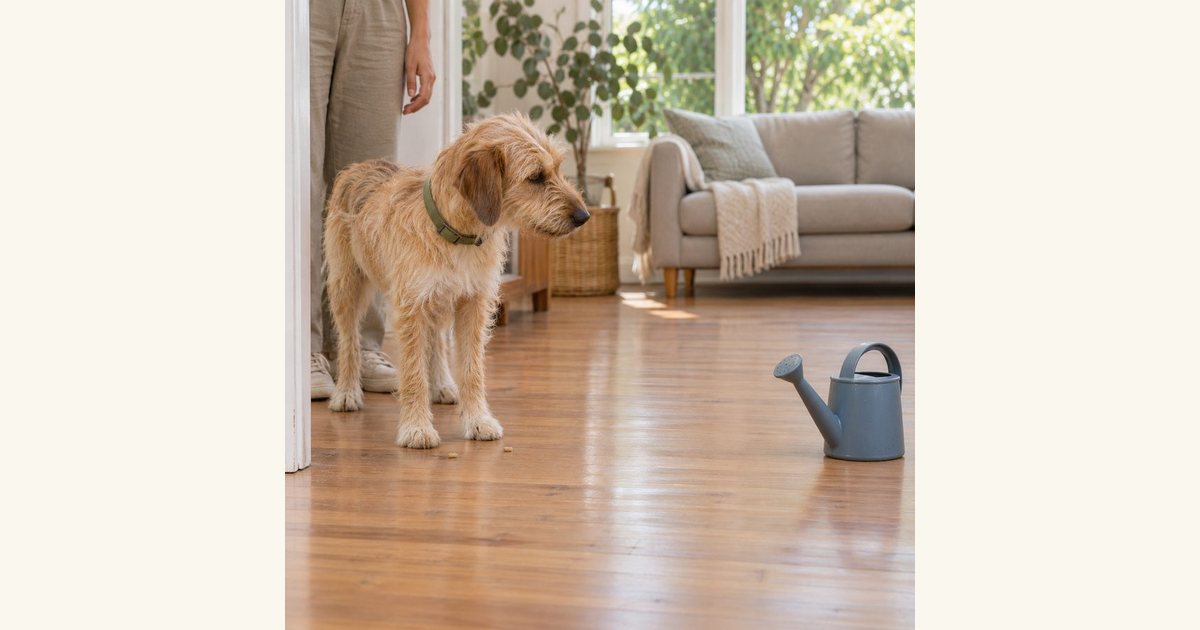
Bring your dog into the room and let them notice the object. Do not lead, push or carry them towards it.
Sitting quietly nearby helps your dog feel safe.
Scatter a few treats on the floor at a distance from the object where your dog is comfortable.
If they look at it or take a step towards it, say “yes” softly and toss a reward a little away from the object.
Tossing the reward away lets them reset and choose to approach again.
If they choose to sniff the object, mark and reward. Let them come and go as they please.
Never lure them closer than they want to go.
Finish after a minute or two. On later days, try a different object, or the same one moving gently or making a soft sound.
For young puppies, add only one or two new things each week.
Make it easier
Move the object further away, choose something smaller or quieter, or simply let your dog see it from across the room. If your dog hides or freezes, remove the object and try something easier another day.
When to move on
Your dog approaches new objects with a loose, wiggly body and sniffs them within a few moments.
If you get stuck
Your dog will not go near it
That is fine. Reward looking from a distance and leave the object in a quiet corner for a day so it becomes familiar.
Your dog barks at the object
Move it further away and keep the session very short. If your dog is often worried by new things, talk to your vet or a qualified reward-based trainer.