 koda
Why practise this?
Steering mouthing onto toys keeps play safe and fun for everyone, including visitors and children, while your puppy grows out of it.
What you need
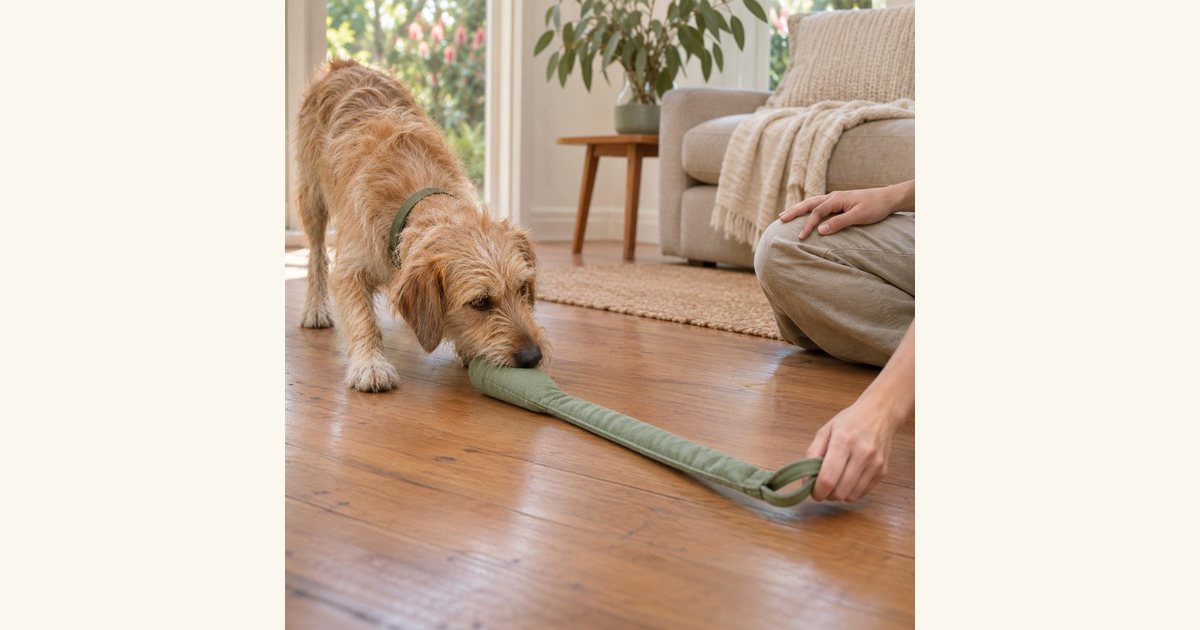
- Keep a long soft or rope toy within reach in each room where you play.
- Play when your puppy is awake and alert, not overtired. Have a quiet space or a gate ready for a short break.
Practise together
Start a gentle game by moving the toy along the floor, away from your hands, so it is easy to grab.
A long toy keeps fingers well away from excited teeth.
When they grab the toy, say “yes” and keep the game going for a few seconds.
If teeth touch skin, stop moving and go still. Offer the toy again once their mouth is off you.
Pulling hands away quickly can look like a game. Stillness is much less interesting.
If nipping carries on, calmly stand up, turn away and pause the game for a few seconds.
If they keep going, step behind a gate for a short break, then come back calmly.
When they are calmer, invite play with the toy again. Finish while things are still relaxed.
Lots of nippy moments come from tiredness. A nap may be what they need.
Make it easier
Use a longer toy, keep play slower and shorter, and offer the toy before your puppy gets excited. If nipping is hard, comes with a stiff body or seems linked to worry, speak with your vet and a qualified reward-based trainer.
When to move on
When your puppy goes for the toy rather than your hands as soon as play starts, other family members can practise the same game.
If you get stuck
Nipping is worst in the evening
This is often tiredness. Plan a quiet chew or a nap in their rest space before that time of day.
They nip at ankles as you walk
Stop and stand still, then scatter a few treats or drop a toy on the floor to give their mouth another job.
Children are getting nipped
Supervise all play, let an adult lead toy games, and give children a calm job such as tossing treats onto the floor.