 koda
Why practise this?
Seeing teeth and gums helps you spot problems early. It is also the first step towards tooth brushing and calmer mouth checks at the vet.
What you need
- Your dog should already offer a relaxed chin rest on your hand.
- Ask your vet to check the mouth first. This practice is not comfortable if teeth or gums hurt.
- Have soft rewards that need little chewing, and sit beside your dog in good light.
The cue
Once lip lifts are easy, say “teeth” once, just before your finger lifts the lip.
Practise together
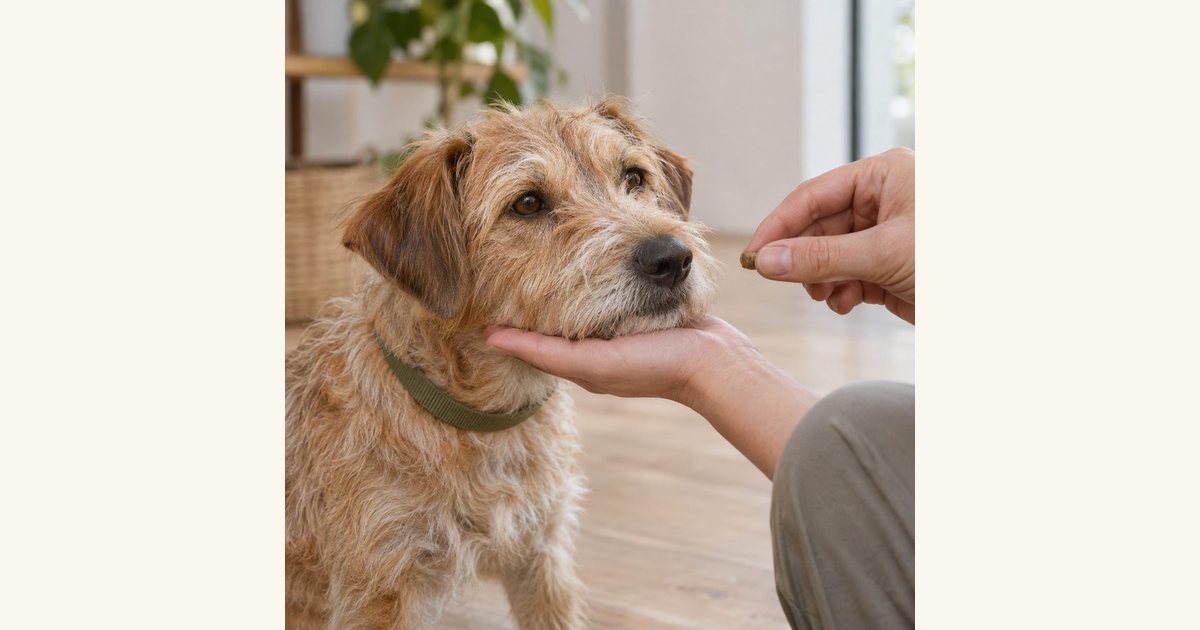
Invite a chin rest. When your dog settles their chin on your palm, say “yes” and reward.
Your dog comes to your hand. Never hold the head or jaw.
With their chin resting, lightly touch the outside of the cheek with a finger of your other hand. Remove it, say “yes” and reward.
Next time, use that finger to lift the side of the lip for one second so you can see the side teeth. Let go, say “yes” and reward.
Lift from the side, towards the back of the mouth, rather than the front.
Build up slowly to two or three seconds, glancing at the teeth and gums. Let go before your dog chooses to move.
Healthy gums are usually pink. Note anything unusual to mention to your vet.
If your dog lifts their chin off your hand at any point, let go straight away and pause before the next try.
Respecting this signal is what makes the chin rest a trusted way to say “ready”.
Make it easier
Go back to a plain chin rest, or a cheek touch with no lip lift. Stop if your dog pulls back, licks their lips a lot or freezes, and try again another day with shorter touches.
When to move on
Your dog keeps their chin resting and stays relaxed through a few seconds of lip lift on each side. Then you can try a peek at the front teeth, or let them lick dog toothpaste from your finger.
If you get stuck
Your dog takes their chin away each time your finger comes near
Your finger is moving too soon or too fast. Reward several plain chin rests, then add a slower, shorter cheek touch.
Your dog licks or mouths your finger
Keep touches very short and reward from the other hand straight after. Practising after a meal can help an eager dog stay calmer.
You notice bad breath, red gums, a broken tooth or pawing at the mouth
Pause this lesson and book a vet check. Mouth pain makes any handling uncomfortable.