 koda
Why practise this?
A dog who pauses at the edge of the footpath is safer around roads and easier to walk in busy places.
What you need
- Your dog should already manage a short pause and a release word, as in the wait lesson.
- Practise first at a step or doorway at home, then at a quiet street with little traffic.
The cue
Say “wait” as you stop, then your release word, such as “free”, as you step off together. This short pause has its own word, separate from the longer “stay” in Stay, then free.
Practise together
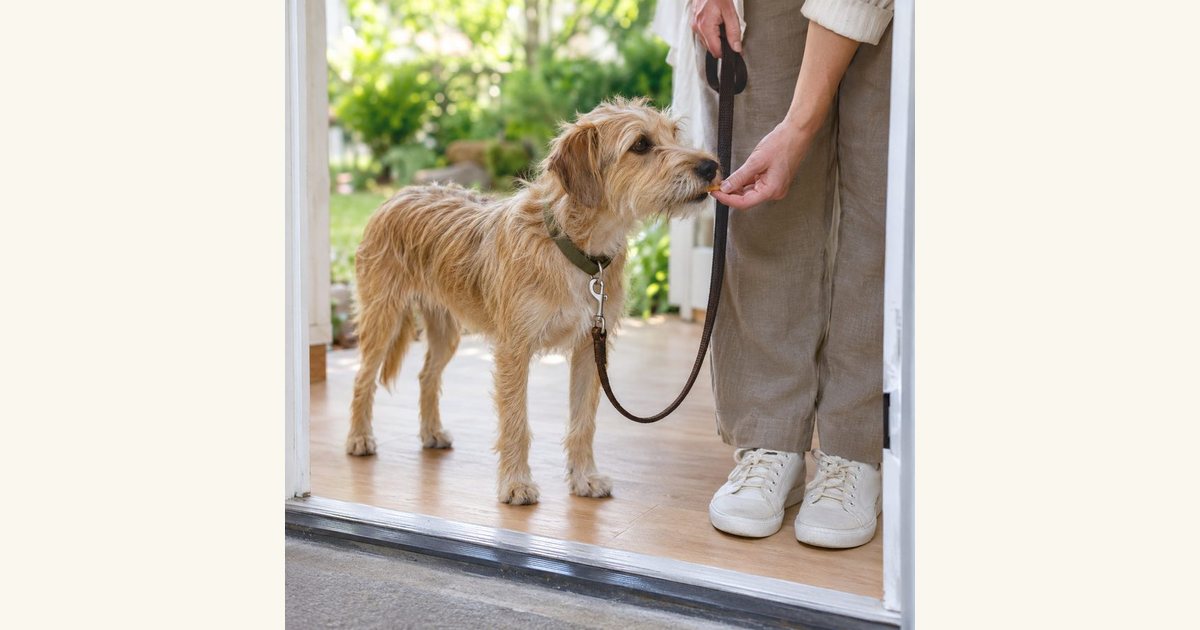
At home, walk up to a step or doorway on a loose lead and stop just before it. Say “yes” and reward when your dog stops beside you.
A sit is not needed. Standing still with four paws down is enough.
Next time, say “wait” as you stop, pause for one second, then give your release word and step forward together.
Release before your dog moves on their own, so success stays easy.
Over several sessions, build the pause to a few seconds. Reward while your dog is still standing beside you.
Try it at a quiet kerb. Stop a pace back from the edge, say “wait” and reward. Release and cross only when it is safe for you both.
Stopping a pace back keeps your dog clear of passing cars and bikes.
Practise at different kerbs on quiet streets, always with the lead held and always crossing only when the road is clear.
This habit adds to your road safety. It never replaces holding the lead.
Make it easier
Go back to the step at home and shorten the pause. If traffic noise worries your dog, practise on quieter streets further from the road.
When to move on
Your dog slows and stops at the kerb with you on most walks, then waits for your release word before stepping out.
If you get stuck
Your dog keeps stepping off before the release
Shorten the pause and release sooner. Reward more often while they are standing still beside you.
Your dog seems worried by traffic
Practise on quieter streets or further back from the road. If they stay worried, talk to your vet or a qualified reward-based trainer.