 koda
Why practise this?
A hand touch gives your dog an easy, happy job. Later you can use it to move them off the sofa, bring them closer on a walk, or help a worried dog turn away from something.
What you need
- Start somewhere quiet with your dog free to approach or leave.
- Keep suitable rewards in the hand you will not ask them to touch.
The cue
Once your dog bumps your hand straight away, say “touch” once, just before you offer it.
Practise together
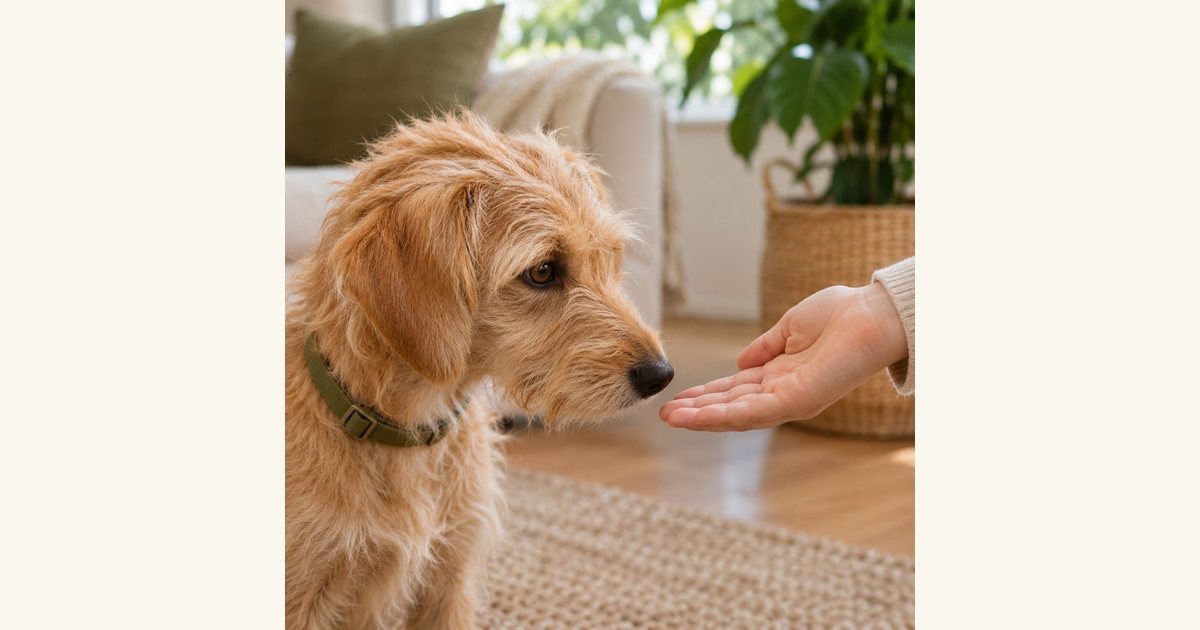
Hold an open, relaxed palm close enough for an easy sniff. Keep it still; do not push it towards their face.
A flat, still palm at nose height is easiest. Most dogs sniff a new hand, and that sniff is your first chance to mark.
When their nose touches your palm, mark the moment with “yes” and reward from the other hand.
Mark the instant the nose bumps your palm, then bring the reward from your other hand.
Remove the target hand between attempts. Offer it again for a few easy repetitions.
Taking the hand away and offering it again makes each touch a fresh choice.
When the touch is reliable, add your chosen word just before presenting the hand.
Say the word, then offer the hand. Saying it during the touch does not teach it.
Make it easier
Begin by rewarding interest in the hand. If they become frustrated, mouth the hand or move away, pause and make the next attempt easier.
When to move on
Your dog touches your hand within a second or two each time you offer it at nose height, 4 out of 5 tries across two sessions. Then offer it a little to one side, a little lower, or a step away so they move to reach it.
If you get stuck
They lick or mouth your hand
Mark sooner, at the first light bump. If they are teething or excited, offer a chew first and try again when they are calmer.
They sniff once, then lose interest
Try the moment after a reward, when they are already close. Keep the hand still and very near their nose, and use tastier rewards.
They go for the hand with the treats
Keep the treat hand behind your back or in a pouch, and bring it out only after the touch.