 koda
Why practise this?
Following a hand lets you guide your dog onto a mat, past a doorway or onto the vet’s scales without pushing or pulling.
What you need
- Your dog should already touch a still, open hand happily.
- Start in a quiet room with space to walk a few steps. Keep rewards in your other hand.
The cue
Keep using your “touch” word. Once they follow a moving hand reliably, you can add a word such as “follow” as you start to move it.
Practise together
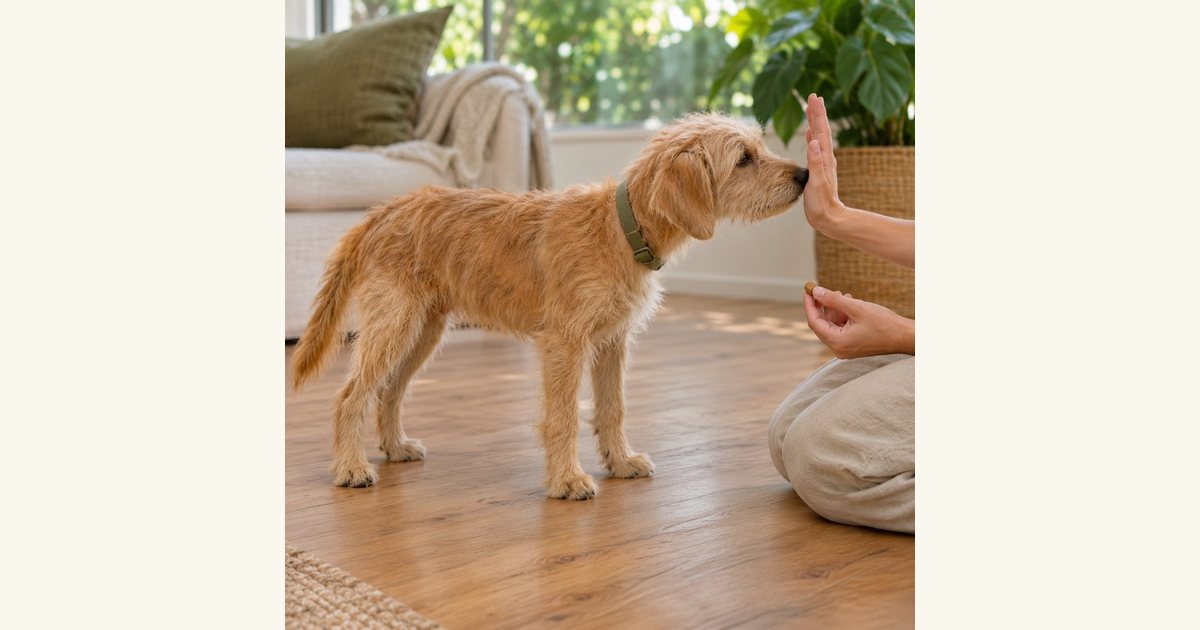
Offer your target hand, held still, as you have before. Mark the touch with “yes” and reward from your other hand.
Warm up with something they already know well.
Present your hand a little to one side so your dog turns their head to reach it. Mark and reward.
Swap sides so they don’t start guessing.
Now hold your hand a step away. When they walk over to touch it, mark and reward.
Wait for them to come. Never bring your hand into their face.
As their nose comes close, slowly slide your hand a short way so they follow it, then let them touch. Mark and reward.
Move more slowly than you think. Let them catch the hand.
Use this to guide them a few steps onto a mat or through a doorway. Keep each trip short and easy.
If they lose interest, go back to a still hand.
Make it easier
Go back to a still hand very close to their nose. Stop if they become frustrated, start mouthing or move away.
When to move on
Your dog follows your moving hand for four or five steps and touches it. Then use it to guide them onto a mat or the bathroom scales at home.
If you get stuck
They lose interest when your hand moves
Slide it only a tiny distance and let them touch sooner. Try a quieter room.
They nibble or bump your hand hard
Reward the calmer touches, and hold your hand still for a moment before you move it.
They follow the reward hand instead
Keep rewards behind your back or in a pouch, and reward only from the other hand.