 koda
Why practise this?
Puppies who learn early that everyday noises are no big deal tend to feel calmer at home and out in the world.
What you need
- Choose one sound, such as a vacuum cleaner switched on in another room, or a recording played very quietly.
- Ask a helper to make the sound while you stay with your puppy, rewards ready.
- Start when your puppy is relaxed and free to move away.
Practise together
Have the sound start quietly or far away, such as in another room with the door ajar.
If your puppy stops eating or stares towards the sound, it is too close or too loud.
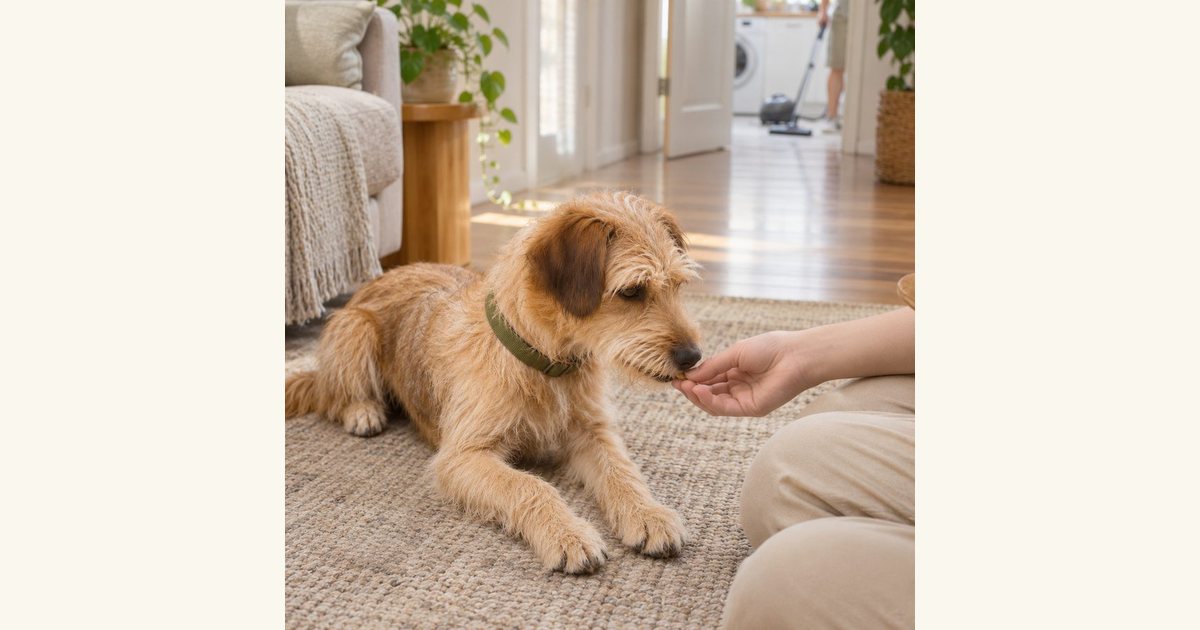
As soon as the sound starts, give your puppy a reward or a short gentle game. When the sound stops, the rewards stop too.
The sound comes first and predicts the good things. That order matters.
Repeat a few times with short bursts of sound, checking their body language each time.
Signs of worry include freezing, lip licking, yawning, pacing or backing away.
If they stay relaxed, bring the sound a little closer or a touch louder in a later session, not on the next turn.
Progress in small steps across days, not minutes.
Finish after a few easy repetitions, while your puppy is still relaxed.
Make it easier
Make the sound quieter, shorter or further away. If your puppy hides, trembles or will not eat, stop and try another day at a much lower level. If a dog is already frightened of sounds, speak with your vet and a qualified reward-based trainer or veterinary behaviourist.
When to move on
When your puppy hears the sound, glances at it and then looks to you for a reward, you can slowly raise the volume or reduce the distance in a later session.
If you get stuck
They bark at the sound
Go quieter or further away, so the sound is barely noticeable, then rebuild slowly.
They ignore the rewards
The sound is too much for now. Stop, reduce the volume, and try again later with tastier rewards.
They are fine with recordings but not the real thing
Real items add movement and vibration. Go back to a bigger distance with the real item and build up just as slowly.