 koda
Why practise this?
Regular ear checks help you notice redness, a smell or a grass seed early, and make vet ear exams and any future ear drops much easier.
What you need
- Choose a calm moment when your dog is resting near you in good light.
- Start only with a dog who enjoys a gentle touch on the shoulder or side.
- Have small rewards ready and sit beside your dog rather than leaning over them.
The cue
Once a touch is easy, say “ears” once, just before your hand moves towards their head.
Practise together
Touch the side of your dog’s neck or cheek for a second. Take your hand away, say “yes” and reward.
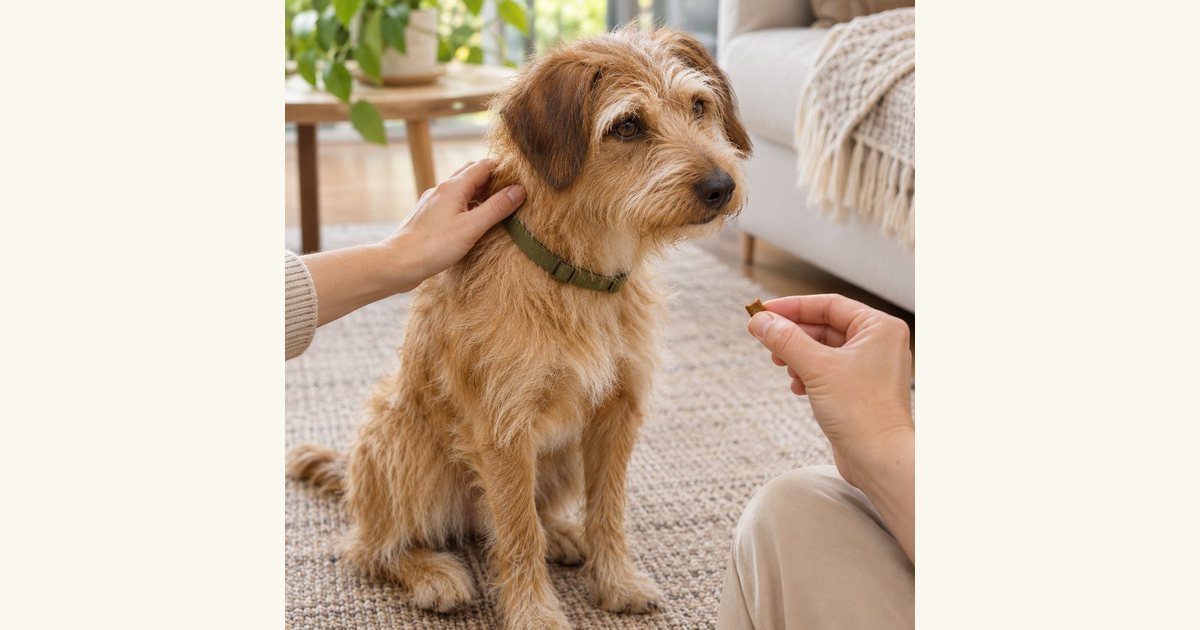
Rest your hand lightly on the base of one ear for a second. Remove it, say “yes” and reward.
Approach from the side, not from above the head.
When that is easy, gently lift or fold back the ear flap for one second. Let it go, say “yes” and reward.
For upright ears, a light touch on the outer edge is enough at this stage.
Lift the flap and take a quick look inside for one or two seconds. Let go, then reward.
You are only looking. Do not put anything into the ear.
Check one ear, then finish. Try the other ear after a break or on another day.
Notice what normal looks and smells like for your dog, so changes stand out.
Make it easier
Stay on the neck or cheek, or make the touch shorter. Stop if your dog shakes their head, pulls away or seems uneasy, and try again another day.
When to move on
Your dog stays relaxed, or leans in, while you lift the flap and look for a few seconds. Then you can practise with the other ear and with another familiar person.
If you get stuck
Your dog shakes their head or turns away as soon as you touch the ear
Go back to the neck, then the base of the ear for less time. If this is new for your dog, the ear may be sore, so ask your vet.
Your dog follows your treat hand instead of relaxing
Keep rewards in your other hand out of sight, and offer them only after the ear touch ends.
The ear looks red, smells or has discharge
Stop practising on that ear and book a vet check. Ear problems are often painful.