 koda
Why practise this?
A friendly drop cue helps you get a toy back during play, and it keeps letting go a happy choice rather than a contest.
What you need
- Choose a toy your dog likes but does not guard, plus a few rewards they find even more appealing.
- Practise with one dog in a quiet room, away from children and other pets.
The cue
Say “drop” once, then show the reward. If you already use “swap” from the toy swap lesson, you can keep that word instead. Over later sessions, pause a moment after the word so your dog lets go before seeing any food.
Practise together
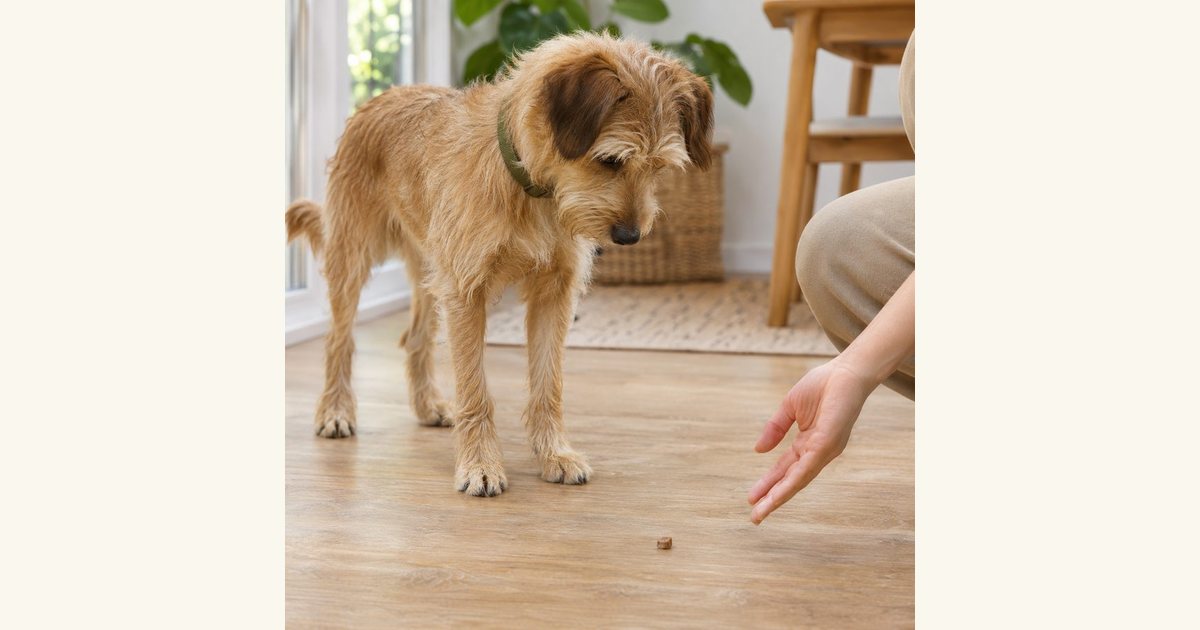
Without any toy, say “drop” and then toss a reward on the floor. Repeat until your dog looks down when they hear the word.
This teaches the word on its own, so there is nothing to give up yet.
Play gently with a lower-value toy. While it is in their mouth, say “drop” once, then place a reward on the floor near their nose.
Keep the toy still. A moving toy is much harder to let go of.
When the toy falls, say “yes” and let them eat. Pick the toy up calmly while they eat, or leave it if they seem unsure.
Never pull, pry or chase. If they keep it, the game simply pauses.
Offer the toy straight back and restart the game. Getting the toy back is part of the reward.
If every swap ends with the toy gone, dogs learn to hold on tighter.
After a few easy swaps, say “drop” and wait a breath before showing the food. Reward generously when the toy falls first.
Build up to favourite toys slowly over later sessions.
Make it easier
Go back to a less exciting toy and show the reward straight after the cue. End the session if play gets too wild or they start to hold on harder.
When to move on
Your dog lets go of a lower-value toy on the first “drop”, before seeing food. Then try a favourite toy in the same quiet room.
If you get stuck
They run off with the toy
Don’t chase. Sit quietly and wait, then try again later with a less valuable toy.
They drop it, then grab it again straight away
Place the reward a little further from the toy so you have time to pick it up, then offer it back.
They freeze or grip the toy harder as you come close
Move away and stop this lesson. This can be an early sign of guarding, so read the Guarding food and favourite things guide and ask your vet about individual help.