 koda
Why practise this?
A relaxed down helps your dog settle in cafés, at the vet and at home. Fading the lure quickly means your dog lies down because they understand the signal, not only because they can see food.
What you need
- Begin only when sitting is comfortable, on a soft, non-slip surface.
The cue
Say “down” once, just before your hand signal. Later, you can try the word on its own.
Practise together
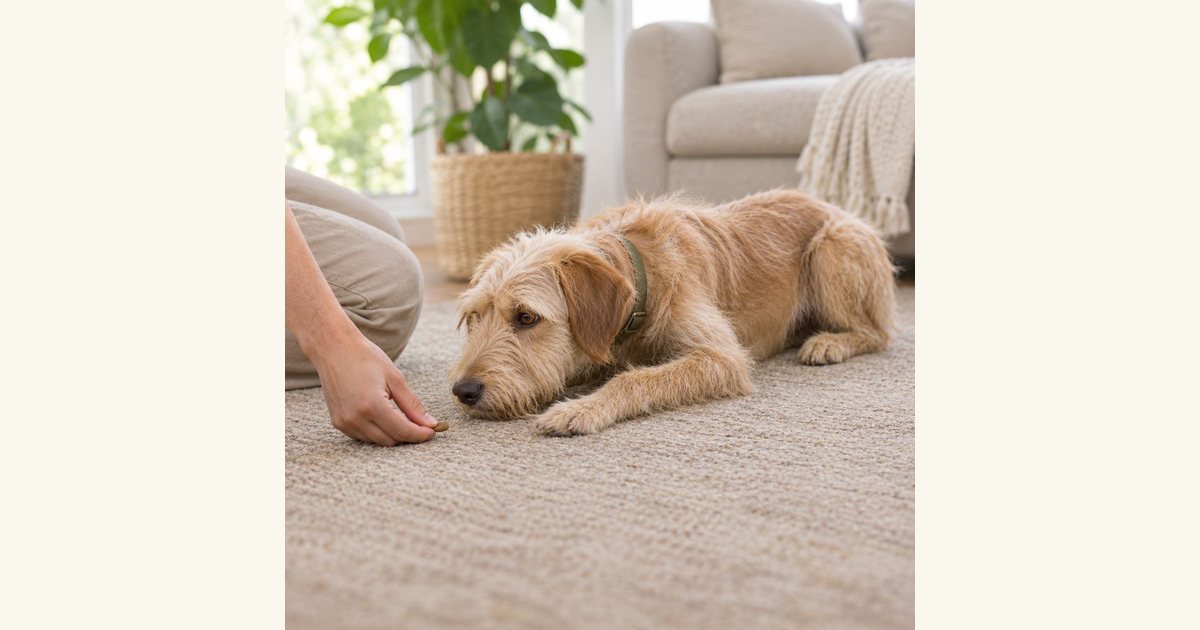
Slowly lower a treat from their nose towards the floor, then forwards.
Move the treat straight down between their front paws first, then slowly forwards along the floor.
When they lie down, say “yes” and reward. Never press their body down.
Mark the moment their elbows touch the floor, then reward between their paws.
When the movement is easy, use the same gesture with an empty hand. Mark the down and reward from your other hand.
Aim to use an empty hand within a few sessions. If they get stuck, use the treat for one or two goes, then try empty again.
Once that hand signal is reliable, say “down” just before it. Finish after a few comfortable attempts.
Say the word first, pause, then give the signal.
Make it easier
Reward a smaller movement, or finish. Stop if lowering their body appears uncomfortable.
When to move on
Your dog lies down when you say “down” and give a small hand signal with no treat in that hand, 4 out of 5 tries across two sessions in a quiet room. Then try a different room or a mat. Go to your bed and A quiet moment on a mat build on this.
If you get stuck
They stand up and walk forwards
Move the treat more slowly, and straight down before it goes forwards. Try on a soft mat, which many dogs find easier.
Their bottom pops up
Reward the first small dip of the shoulders, then ask for a little more over the next tries.
They will not lie down on the floor
Some dogs dislike cold or hard floors. Use a rug or bed, and try after a walk when they are a little tired.