 koda
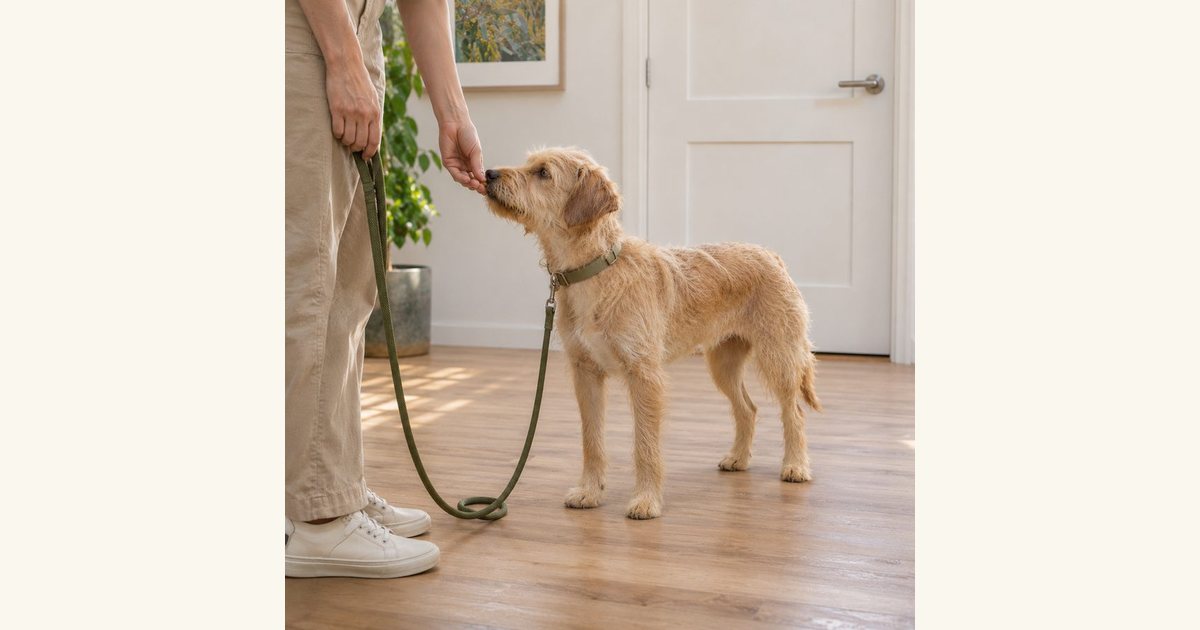
Why practise this?
Rushing through doors can lead to bumps, slips and escapes. A calm pause at an inside door, practised when nothing exciting is happening, makes busy doorways safer later.
What you need
- Choose a door that opens into another secure room.
- Use a loose lead and suitable rewards. Keep paws clear of the door’s movement.
The cue
You do not need a word at first. Once your dog pauses easily, say your release word, such as “free”, to invite them through with you.
Practise together
Stand back from the closed door. Reward four paws on the floor and a slack lead.
Reward low and close to your legs, so staying near you pays off.
Touch the handle. Reward continued calmness before trying any opening.
If they move towards the door, simply stop and wait. Reward again as soon as they settle.
On another easy attempt, open the door a little. Gradually widen the opening only while your dog remains comfortable.
Open a few centimetres at a time. Close it gently only if it will not touch them.
When they can pause comfortably, walk through together and reward again.
Walking through together is the reward. Keep it calm and unhurried.
Make it easier
If they rush or become frustrated, finish and choose a less exciting doorway next time. Keep outside exits secure; training does not replace a physical safety plan.
When to move on
Your dog stays with four paws on the floor and a loose lead while you open the door fully, then walks through calmly with you, 4 out of 5 tries across two sessions. Then try a different inside door, before any door that leads outside.
If you get stuck
They rush the gap
Open the door less, and reward more often while it is only slightly open. Try again when they are calmer, such as after a walk.
They jump or spin with excitement
Practise at doors that lead somewhere boring, at quiet times, and keep sessions very short.
They sit and stare at the handle
That is fine. A sit is a lovely choice. Just keep the lead loose and reward the calm pause.