 koda
Why practise this?
Giving chewing a good outlet protects your belongings and your puppy, and a calm chew is a lovely way for them to unwind.
What you need
- Choose two or three safe chew items with different textures, sized so they cannot be swallowed whole.
- Tidy shoes, cables and anything precious or risky away from the practice area.
Practise together
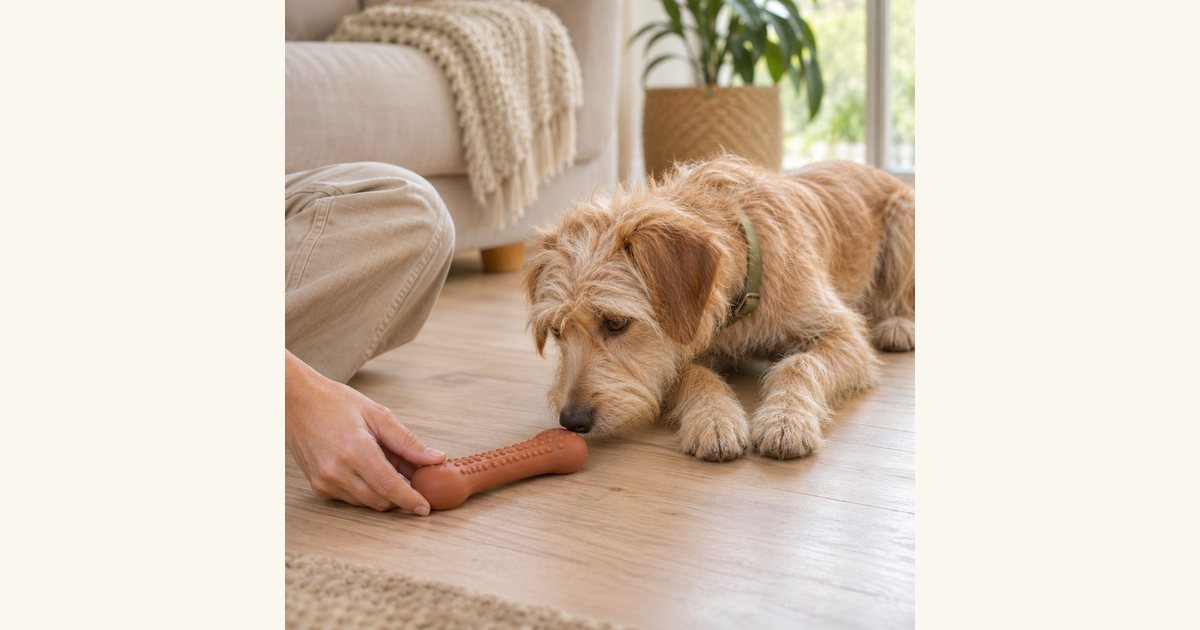
Sit on the floor and offer one chew item, resting it on the floor near your puppy or holding it still.
A little of their usual food smeared inside a rubber toy can spark interest.
When they sniff, lick or mouth the item, say “yes” quietly and praise. Let them keep chewing.
Food rewards are optional here. The chewing itself is enjoyable.
Stay nearby and relaxed while they chew. Calm company is part of the reward.
If they move to something you would rather they left, offer an approved chew instead and praise when they take it.
Skip the telling off. Simply make the better choice easy and rewarding.
When they lose interest, put that chew away. Bring out a different one next time so each feels fresh.
Rotating a few chews every few days keeps them interesting.
Make it easier
Try a softer or tastier chew, or practise when your puppy is a little tired and ready to settle. If chewing seems frantic or painful, pause the lesson and check in with your vet.
When to move on
When your puppy heads to their own chews by choice, keep one or two in each room and praise those choices whenever you notice them.
If you get stuck
They are not interested in any chew
Try different textures, such as rubber, rope or a food-filled toy. Many puppies are keener to chew after play or a walk.
They keep going back to the furniture
Block access to that spot for now and leave an approved chew there instead. Praise the swap whenever you see it.
They stiffen or growl over a chew
Give them space and do not take it away. Pause this lesson and speak with a qualified reward-based trainer or veterinary behaviourist.