 koda
Why practise this?
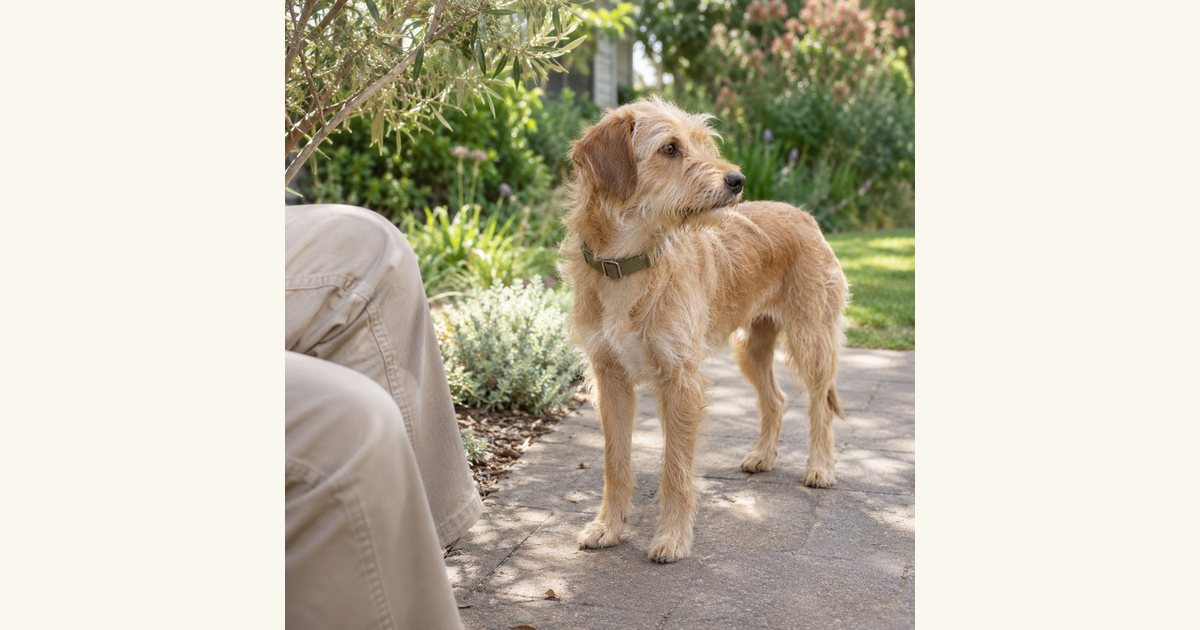
A dog who checks in with you now and then is easier to guide on walks and around the house. Rewarding a quick glance teaches them that you are worth noticing, without any pressure to stare.
What you need
- Choose a quiet space with room to move away.
- Have small suitable rewards ready. A quiet “yes” will mark the useful moment; follow it with a reward every time.
The cue
There is no word for this one. Your dog learns that glancing your way pays off. The quiet “yes” is your marker, and a reward always follows it.
Practise together
Stand or sit nearby and let your dog look around.
Stay quiet. You are waiting for them to choose to look, not calling them.
When they glance towards you, say “yes” and promptly offer a reward.
A glance at your face, hands or knees all count at first.
Let them look away again. Wait quietly for the next glance, repeat a few times, then finish.
Tossing the reward a little away from you gives them a natural chance to look back again.
Make it easier
Reward even a quick glance. Move somewhere quieter or stop if they seem worried.
When to move on
Your dog glances back to you on their own within a few seconds of finishing each reward, in a quiet room, 4 out of 5 tries across two sessions. Then try the garden or a room with a little going on, or move on to Focus with a little going on.
If you get stuck
They never look at you
Sit closer, choose an even quieter room, and start straight after a reward, when they are most likely to look back.
They stare at you and will not look away
That is fine, but you only need a glance. Toss the reward a little way off so they turn away, then wait for the next look.
They are too busy sniffing outside
Go back indoors for a few more sessions. Outside, let them sniff first, then practise once the first excitement has passed.