 koda
Why practise this?
Car parks and roadsides are busy. A dog who waits for their lead and release is far less likely to leap out into danger.
What you need
- Your dog should already manage a short pause and a release word in the house, as in the wait lesson.
- Park with the engine off in a quiet, securely enclosed area away from traffic. An adult handles the door and lead.
- Before opening the car door, check the dog is secured in a travel harness or behind a latched crate door. Keep that restraint in place until the lead is attached and held. Skip this exercise if the setup would allow a loose dog to escape.
The cue
Say “wait” once as you begin to open the door, and your release word, such as “free”, once the lead is on and it is safe. This short pause has its own word, separate from the longer “stay” in Stay, then free.
Practise together
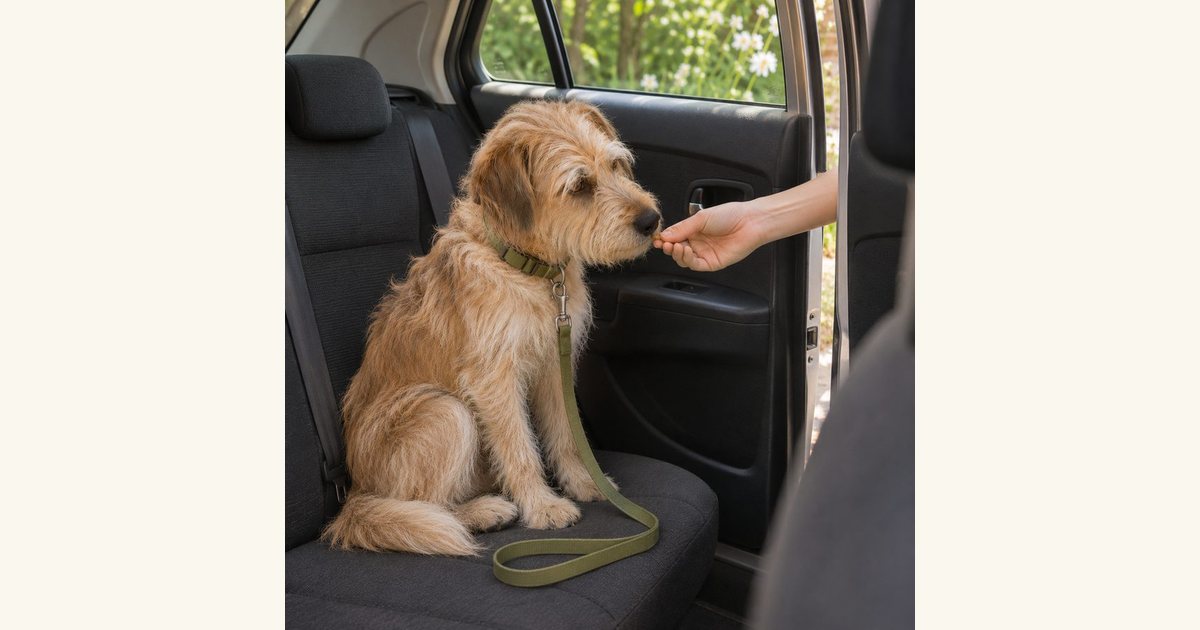
Open the door just a little. If your dog stays where they are, say “yes” and pass a reward in, then close the door slowly.
Watch paws and tails whenever you close the door.
If your dog waits calmly, open a little wider on a later attempt. If they push towards the gap, stop. Keep the restraint in place and wait until paws, nose and tail are well clear before closing the door.
Keep the door still if your dog approaches it. Make more room before moving it again.
With the door open, reach in and clip the lead to their harness. Reward while they stay in place.
If your dog travels in a crate or a seatbelt harness, open or unclip it only after the lead is on.
Pause for a second, then say your release word and help your dog out. Reward once all four paws are on the ground beside you.
Puppies, small dogs and older dogs may need a ramp or a lift rather than a jump.
Practise in quiet spots before using it in car parks or by the road. Keep hold of the lead every time.
Only practise with the engine off and well away from moving traffic.
Make it easier
Open the door less and reward sooner. If your dog is anxious in the car, practise with it parked at home and keep sessions very short.
When to move on
Your dog stays in place as the door opens fully, waits while the lead goes on and gets out only on your release word.
If you get stuck
Your dog pushes past as soon as the door opens
Stop and keep the travel restraint in place. Practise a quiet wait away from the vehicle first. Get help with the setup if the dog cannot remain physically secure.
Your dog is very excited after a drive
Wait for a calmer moment before opening the door, or practise this at home on days you are not going anywhere.