 koda
Why practise this?
Dogs who are relaxed in the car find vet visits, holidays and moving house much easier, and travel is safer for everyone.
What you need
- Park somewhere safe, quiet and shaded, with the engine off. Check the inside of the car is comfortable, not hot.
- Put a familiar blanket or bed inside, and bring small rewards and a safe long-lasting chew.
- Keep your dog on a lead unless the car is in a secure area.
Practise together
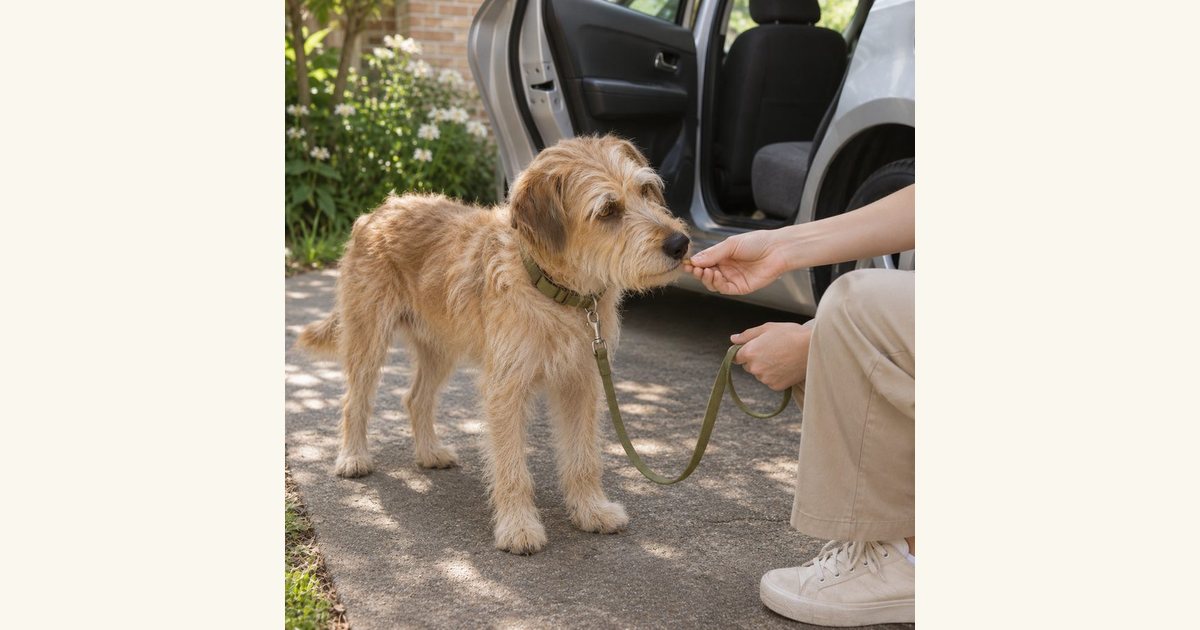
Walk near the car at a distance your dog is happy with. Say “yes” and reward when they look at it or sniff it.
Approach in a gentle curve rather than heading straight for the door.
Open a door and drop a reward on the blanket just inside. Let them reach in or hop in to get it, and leave freely.
Lift puppies and small or older dogs in gently, or use a ramp, rather than asking them to jump.
Over several turns, place rewards a little further inside, on the spot where they will travel.
Once they are settled inside, sit with them with the door open and offer a chew for a minute or two.
This is the moment to pair the car with calm and good things.
Invite them out calmly and finish with a short walk or a game.
Keep early visits short so they end on a relaxed note.
Make it easier
Stay further from the car, keep the door open and reward simply looking at it. If your dog pants heavily, drools, trembles or pulls away, stop and go back to an easier step another day.
When to move on
When your dog gets in happily and settles with a chew, try closing the door for a few seconds, then running the engine briefly, one change at a time, before any short drive.
If you get stuck
They will not go near the car
Practise at a distance where they will still eat, such as walking past the car, and reward looks towards it.
They drool or seem queasy even when parked
Some dogs link the car with feeling sick. Keep sessions very short and ask your vet about travel sickness.
They leap in and get very excited
Make each visit quieter, with a chew and calm company, so the car becomes a place to settle.