 koda
Why practise this?
Regular brushing keeps the coat and skin healthy and lets you spot lumps, ticks and grass seeds early. Taking it slowly now means brushing can become something your dog enjoys.
What you need
- Choose a soft brush suited to the coat; ask a groomer if unsure. Prepare rewards in a quiet space where your dog can leave.
- Practise only with an adult and a dog already comfortable with gentle touch. Ask your vet about pain, sore skin, established fear or guarding. Get professional help with mats.
Practise together
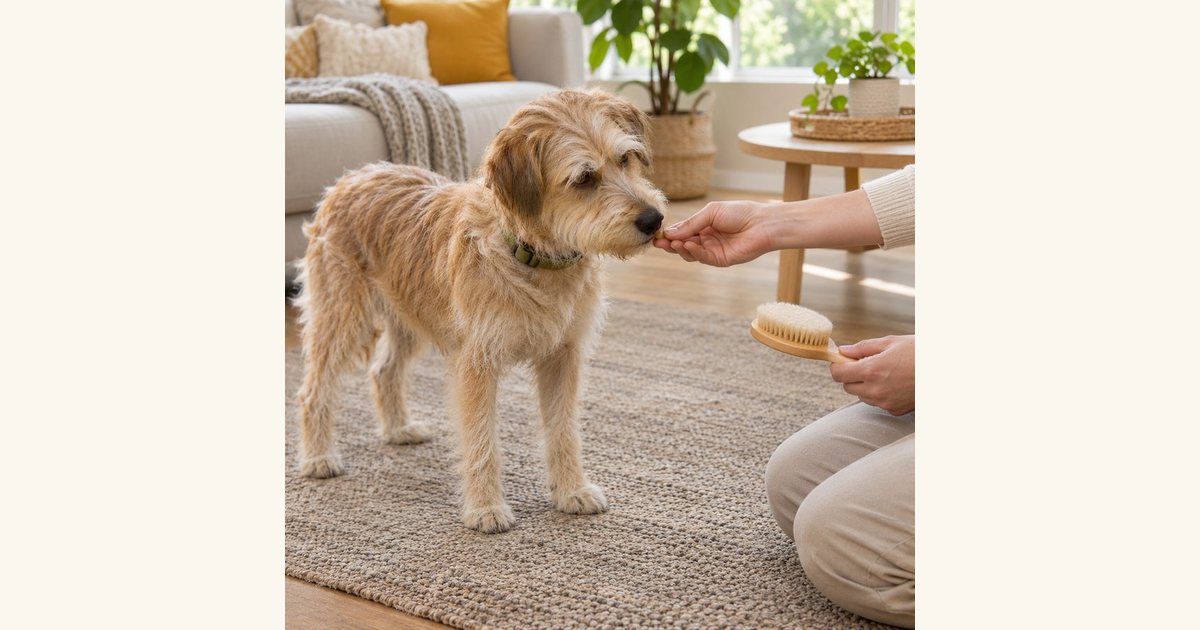
Show the still brush from a distance your dog finds comfortable, then reward. Moving away means give more space or finish.
Let them sniff the brush first if they want to.
Over separate comfortable attempts, move it slightly closer without contact, then reward. There is no need to reach touching today.
Small changes are progress. Closer without touching counts.
When this is easy, briefly rest the brush where familiar touch is already welcome. Remove it, then reward.
Choose a spot they already love being touched, such as the chest or shoulder.
Pause. Continue only with a relaxed dog who chooses to stay. Stillness or eating alone does not prove comfort.
Watch for a soft body and a relaxed face, not just stillness.
On another day, after contact is consistently comfortable, try one gentle stroke, remove the brush and reward. Stop at tension or withdrawal.
One stroke, then stop. Let them ask for more by staying close or leaning in.
Make it easier
Keep the brush farther away. Never restrain your dog or use food to continue through discomfort.
When to move on
Your dog stays relaxed, or leans in, for one slow stroke on an easy spot, 4 out of 5 tries across two sessions. Then try two strokes, or one stroke on a spot next to it, such as from shoulder to back. Leave the belly, legs, tail and face for much later.
If you get stuck
They bite or play with the brush
Try when they are a little tired, give them a chew to hold, and keep the brush still for longer before any stroke.
They walk away
Let them. That is a clear answer. Next time, keep the brush further away or end sooner.
They only allow it while eating from a lick mat
A lick mat can help, but it can also hide worry. Watch their body, and pause the lick mat now and then to check they still want to stay.