 koda
Why practise this?
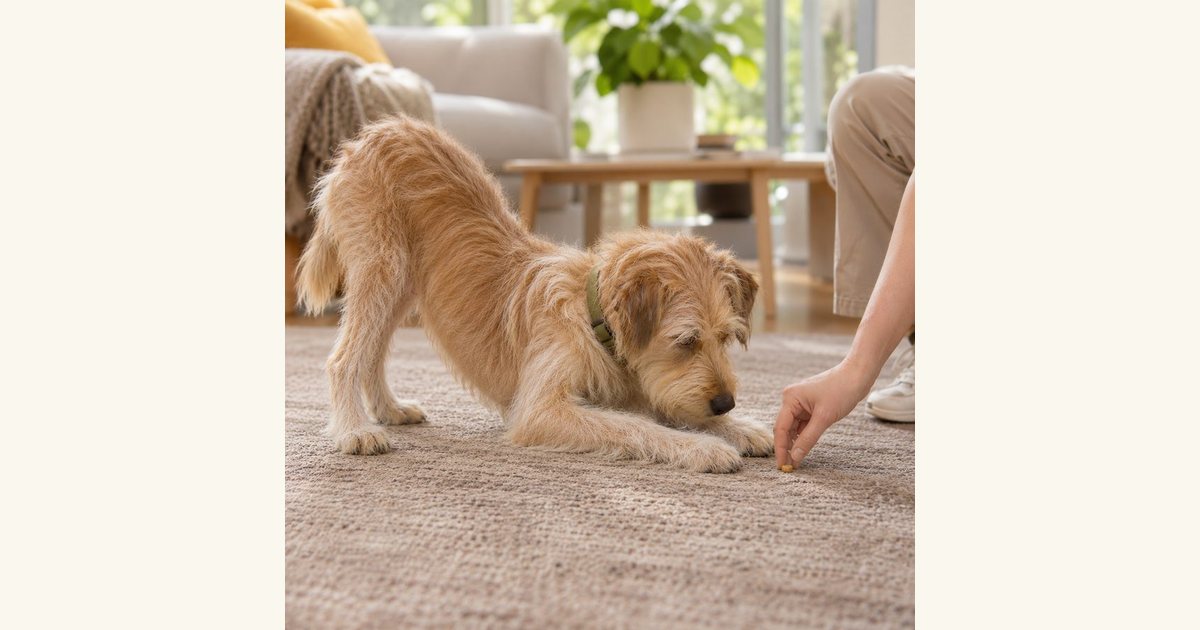
Bowing is a lovely stretch and a calm trick to show visitors, and it gives energetic dogs something to do instead of jumping up.
What you need
- Start with your dog standing on a non-slip mat or rug.
- Have small rewards ready and crouch or kneel in front of them.
- Practise when they are loose and warmed up, not straight after a long rest.
The cue
When the bow is easy to lure, say “bow” once, then show your hand signal.
Practise together
With your dog standing, hold a reward at their nose and slowly draw it straight down to the floor, close to their front paws.
Move slowly, as if you are drawing a line down towards their chest.
Say “yes” and reward any dip of the elbows towards the floor while their back end stays up.
Small dips count. You are building the shape a little at a time.
If they lie all the way down, help them up with a reward and mark a little earlier next time, before the back end drops.
Take a short break if they keep lying down, and keep each lure brief.
Once the bow comes easily, lure with an empty hand and reward from your other hand.
Gradually make the hand movement smaller, until a little downward point is enough for a bow.
Make it easier
Reward a tiny head dip or elbow bend and finish there. Stop if your dog seems stiff or sore, and check with your vet if stretching looks uncomfortable.
When to move on
Your dog bows with elbows down and back end up when you give a small hand signal. You can add your word and ask them to hold it for a second.
If you get stuck
They lie all the way down
Mark earlier, while the back end is still up, and keep sessions short.
They only follow with their head
Move the reward slightly back towards their chest, between the front legs, so their weight shifts back.
They step backwards instead
Practise with a soft barrier behind them, such as the side of a sofa, so stepping back is less likely.