 koda
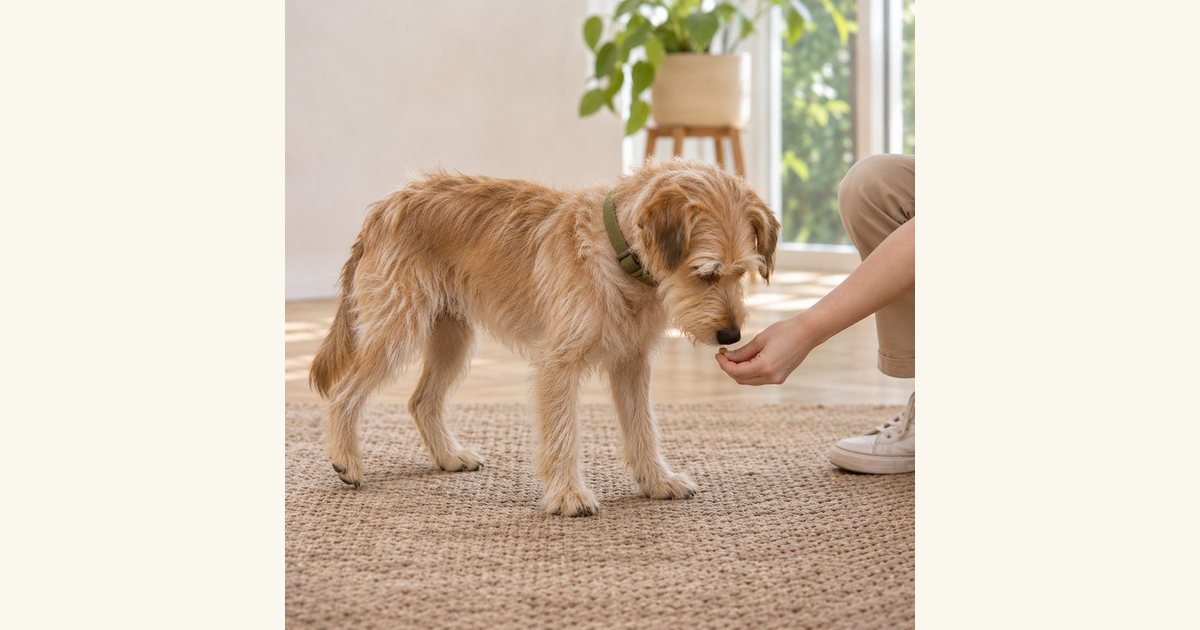
Why practise this?
Backing up builds awareness of the back feet, and it is handy in doorways, narrow halls and around the car.
What you need
- Use a hallway or the gap between a sofa and a wall, so straight back is the easy choice.
- Stand facing your dog on a non-slip floor with small rewards ready.
- Start with your dog standing, not sitting.
The cue
Once your dog steps back easily as your hand moves, say “back” just before the movement.
Practise together
Hold a reward at your dog’s nose, then move it slowly in towards their chest, keeping it low.
Move your hand back towards them, not up. Raising it tends to cause a sit.
The moment a paw steps backwards, say “yes” and give them the reward.
Even a small weight shift backwards is worth marking in the first session.
Repeat until they step back as soon as your hand moves. Then wait for two small steps before you say “yes”.
Practise the same movement with an empty hand, rewarding from your other hand after each step back.
Gradually make your hand signal smaller and stand a little more upright, so your dog does more of the movement on their own.
Make it easier
Reward a single shift of weight and finish. If your dog sits, lower your hand and move it more slowly. Stop if they seem unsure about stepping backwards.
When to move on
Your dog takes two or three straight steps back to a small hand signal. You can then add your word and practise in a new room.
If you get stuck
They sit down
Keep the reward lower, level with their chin, and move it more slowly towards their chest.
They swing sideways or turn around
Use a narrower space, such as a hallway, so straight back is easiest.
They walk forwards to you
Start with your hand right at their nose and reward the smallest step back, before they can move forwards.