 koda
Why practise this?
Most dogs need to spend some time alone. Learning it slowly helps them stay settled rather than worried when you leave.
What you need
- Exercise, feed and offer a toilet break before practising.
- Set up their comfortable resting spot with a lick mat or chew.
- Choose a calm time with no visitors or loud noise. Set up a camera you can watch live for the first out-of-sight practice if possible.
Practise together
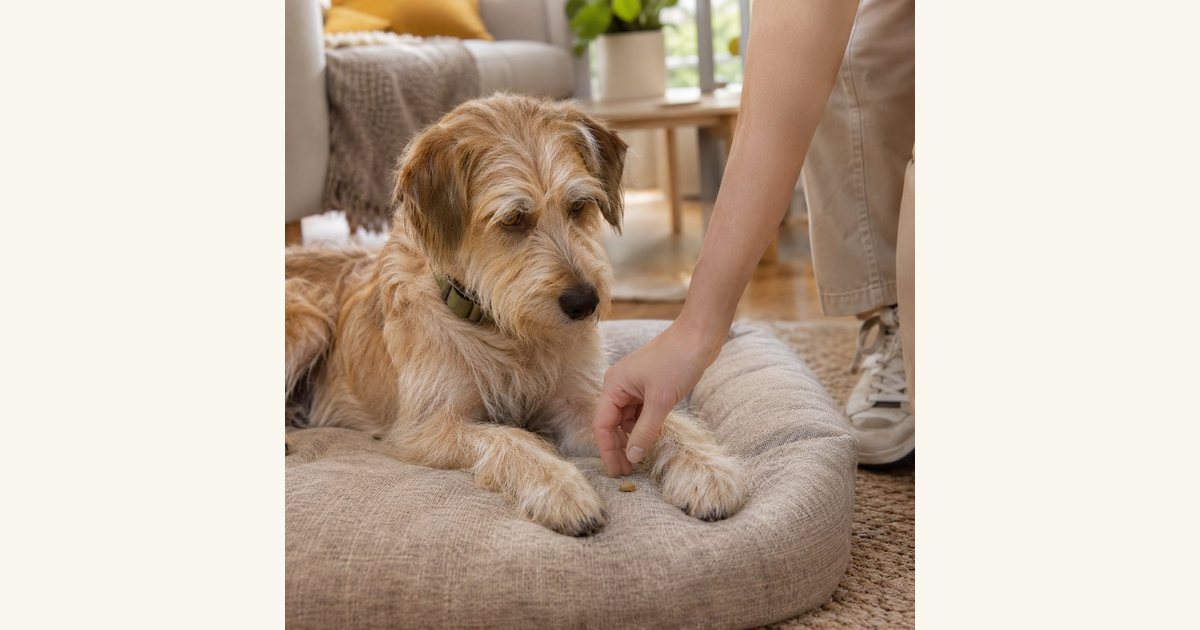
While your dog settles on their bed, step a little away, then come straight back and calmly drop a reward between their paws.
Calm, quiet returns help more than big greetings.
Build up to walking out of the room for a moment and returning before your dog gets up. Keep your comings and goings low key.
If your dog follows you, that step was too big. Go back a stage.
Next, step out and close a door or baby gate briefly, then return. Mix very short absences with slightly longer ones.
Varying the length keeps it from becoming a predictable countdown.
Practise picking up keys or putting on shoes without leaving, so these stop meaning you are about to go.
Do this at random times through the day, not only before you really leave.
Only try the front door once a moment apart indoors is comfortable. Watch live if possible and return before your dog shows worry. At pacing, freezing at the door or whining, return calmly and shorten the next absence.
Recording your dog on a phone or camera shows how they really cope.
Make it easier
Go back to a shorter absence that was easy and stay there for a few sessions. If your dog cannot settle even with you nearby, stop and seek professional advice.
When to move on
Build time only after the current absence is consistently comfortable. If a practice is difficult, make the next one shorter. If even a moment apart is hard, ask your vet for support.
If you get stuck
Your dog follows you to every door
Make the steps smaller, such as one step away and back. A baby gate can create gentle distance while they can still see you.
Your dog will not touch their chew when you leave
Not eating can be a sign of worry. Shorten the absence, and talk to your vet and a qualified reward-based trainer or veterinary behaviourist if it continues.