 koda
Possible blue-green algae exposure
Keep your dog from licking their coat. Rinse the coat with fresh water and go straight to an emergency vet. Have someone phone ahead if possible. Poisoning can progress quickly. Keep dogs out of lakes, dams or rivers with algae warnings, scum, foam or water that looks like spilled paint. You cannot tell by looking which blooms are toxic.
Cornell University College of Veterinary Medicine · Blue-green algae poisoningNot every dog can swim
Flat-faced breeds such as pugs and bulldogs, and dogs like dachshunds, corgis, basset hounds and greyhounds, can struggle in water. Puppies and older dogs tire quickly. Start in shallow, calm water, let your dog choose how far to go, and never throw or push a dog in.
Life jackets and supervision
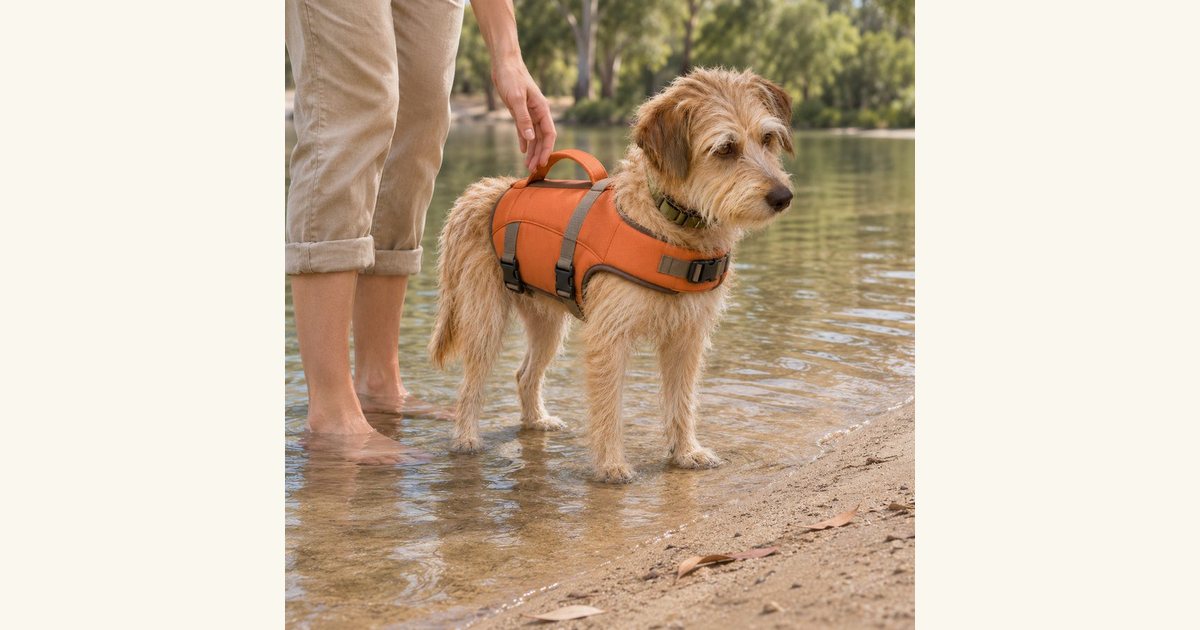
A well-fitted dog life jacket helps even strong swimmers, especially on boats, kayaks and paddleboards. Put it on before you set off. Watch your dog in the water the way you would watch a child. In a pool, show them where the steps are and how to get out, and never let them swim unsupervised.
Rips, currents and local rules
Rips can carry away strong swimmers, dogs included. Check conditions before you go, and if lifesavers say the water is unsafe for people, keep your dog out too. Use beaches where your council allows dogs. In northern Australia, keep dogs away from water where crocodiles may live, and take care in stinger season.
Fresh water, not sea water
Drinking a lot of sea water can make a dog seriously ill. Bring fresh water and a bowl, offer drinks often, and take a break out of the water every 15 minutes or so. If your dog vomits, has diarrhoea, or seems wobbly, confused or very flat after a beach day, go to a vet straight away.
After the swim
Rinse your dog with fresh water to wash off salt, sand and pool chemicals. Then let them rest in the shade, away from hot sand.
Sources and further reading
Cornell University College of Veterinary Medicine · Blue-green algae poisoning