 koda
Signs of good play
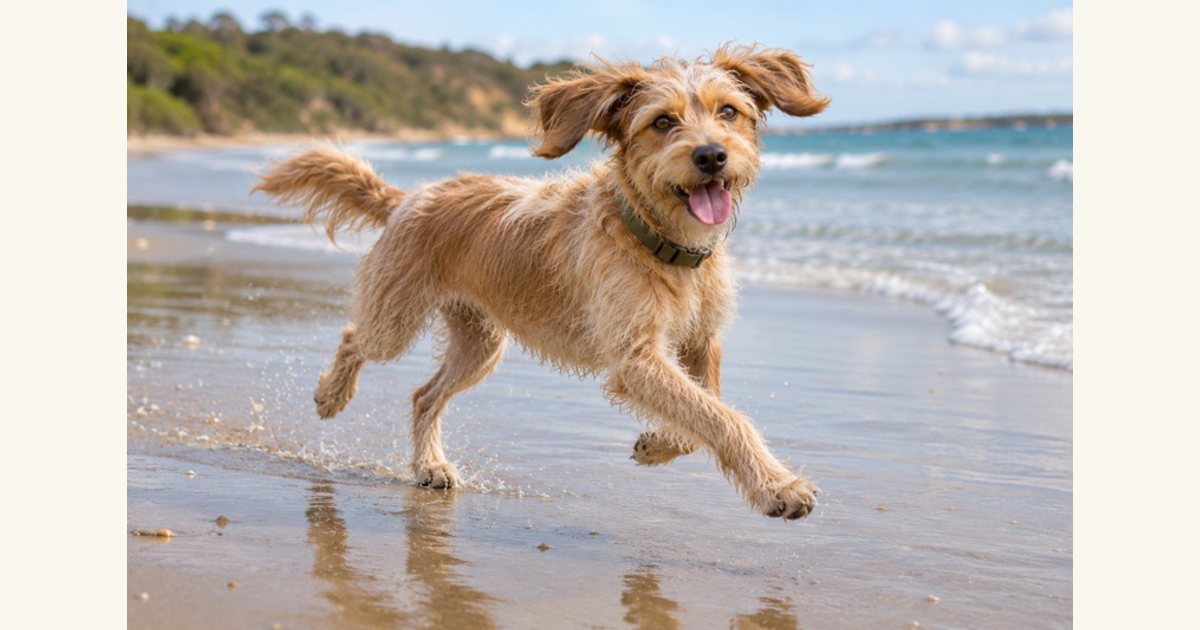
Loose, wiggly, bouncy bodies. Big, silly movements and play bows, where the front end goes down and the back end stays up. Open, relaxed mouths. Both dogs keep coming back for more.
Taking turns
In balanced play, dogs swap roles. The chaser becomes the chased, and the dog on top ends up underneath. Bigger or stronger dogs often hold back, which is called self-handicapping. Short pauses, when both dogs shake off or sniff the ground, are a healthy sign.
Signs it needs a break
Bodies getting stiff, play getting faster and louder without pauses, one dog always chasing or always pinned, one dog trying to hide, leave or tuck their tail, growls that change tone, or lots of mounting. A big dog playing with a small dog or puppy needs extra care.
Try a consent check
If you are unsure, gently call or guide the stronger dog away for a moment. If the other dog shakes off and walks away, they needed the break. If they bounce straight back to invite more play, they were having fun.
How to interrupt
Call your dog cheerfully, reward them for coming, and let everyone have a sniff or a drink before carrying on. Calm breaks every minute or so keep play from boiling over. Avoid grabbing collars between dogs who are very aroused, as people can be bitten by accident.
Not every dog loves play
Some dogs prefer people, sniffing or one or two close dog friends, especially as they get older. That is completely normal. Respect what your dog tells you.